It was about time we celebrate
The Top 10 HR voices
- Greece Edition -
Recognizing the boldest, most transformational HR voices in Greece — and the thinkers, doers, and reformers shaping the future of work.By HR professionals.But, not only for HR professionals.Always human-first.
About the initiative
What is Top 10 HR voices ?
It’s a curated celebration of Greece-based HR professionals who are transforming workplaces with courage, intelligence, and vision.We will spotlight one voice at a time - real people, real insight, real impact, leading up to vote the Top 10 Voices.Built by HR leaders who believe the future of HR must be human, strategic, and honest.→ Published exclusively via LinkedIn & www.top10hrvoices.com | Greece.top10hrvoices.com
→ Featuring one professional per issue. Professionals and Public Figures who contribute towards the transformation of the islands HR broader landscape.
→ Leading to the Top 10 Voices Voices Forums & Events (includ. Awards in Greece) in 2027/28 (STAY TUNED)
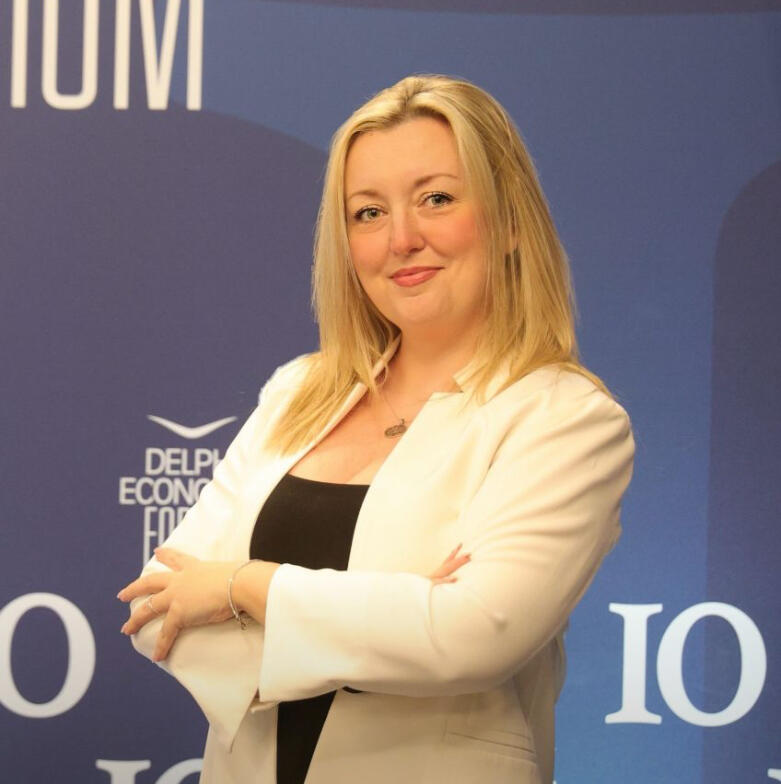
Now LIVE •
This Week’s Featured Voice
Each feature spotlights one bold mind reshaping work in Greece — no fluff, just real insight and impact.Curated bi-weekly, human-first.
The Learner Voice

Beyond Jobs and Titles
"Why Skills, Human Potential and Continuous Learning Will Define the Future of Work” - Dimitra K. -
Senior People & Culture Executive | September 30, 2026 · 5 min read
The Best CV I Never HiredFinally. I had found the perfect CV.She had studied at one of the best universities in the UK. She had spent more than 20 years as a Head of Learning & Development, working for global organisations similar to ours.Surely, she had to be the perfect fit.She passed several interviews before reaching the final one with me. The feedback was almost unanimous: “She is exactly what we are looking for. Her track record is amazing. You barely even need to interview her.”Thank God I did.She was experienced. Extremely experienced. No one could question that.Then I asked her a simple question:“What is a new skill you have learned recently?”She almost seemed offended.“Ms Karakosta, my role is to train and develop others. I know my field.”And she did.The problem was that much of what she knew belonged to a different version of that field.There was little curiosity about new approaches, little evidence of challenging established practices and limited exposure to emerging technologies. She had accumulated enormous experience, but somewhere along the way, learning herself seemed to have become less important than teaching others.For someone applying to lead Learning & Development, that told me more than the rest of her CV.Thank you, next.The people who taught me to hire for potentialYears earlier, when I landed my first HR Manager role, I had been given the opportunity to build an HR function almost from scratch in an organisation growing globally at extraordinary speed.We were expanding internationally, acquiring businesses and transforming digitally, all at once.My boss at the time described my challenge perfectly:
“It is as if someone asked you to fly a plane for the first time, and while you are flying it, change the engine.”I was young, and someone had taken a significant chance on my potential.Building the team was one of my greatest challenges. Initially, I approached experienced HR professionals. I was rejected. A lot.Perhaps understandably, some were reluctant to join a team led by someone younger, without a long, proven track record.So I changed approach.I started hiring people earlier in their careers and, sometimes, people trying to enter HR from somewhere else entirely.One of the first people who joined me was close to my age and had zero HR experience. Her background was highly academic, including a PhD in Ancient Greek.On paper, perhaps not the obvious HR hire.What she did have was passion in her eyes and an almost unlimited hunger to learn.I took the chance.For the next eight years, I watched her continuously learn, build new skills, adapt, take on increasingly complex challenges and grow alongside an organisation whose reality seemed to change almost as quickly as we could understand it.That early “experiment” taught me something I have carried with me ever since.Since then, I have been involved in hiring thousands of people. And whenever I have faced some version of the same choice, experience with little appetite for change, or less experience combined with an extraordinary capacity to learn, I know where my instinct takes me.Ideally, of course, I want both.But if I really have to choose?Give me the learner.Panta rhei“Panta rhei - everything flows.”More than 2,500 years ago, Heraclitus described an idea that feels remarkably relevant to the future of work: everything changes.Perhaps we should have listened more carefully.Only a few years ago, many of us, myself included, were telling people that learning to code would become almost essential. Whatever your profession, digital and programming skills seemed like protection against irrelevance.And then generative AI arrived and changed the conversation again.Today I have a 16-year-old son who wants to become a software developer. As a mother, I sometimes catch myself wondering:Will the job he is preparing for today even exist in the same form by the time he enters the workforce?I don't know.And perhaps not knowing is exactly the point.Careers used to resemble ladders. Increasingly, they may look more like Google Maps with a very unstable signal: constantly recalculating the route because the destination, and sometimes even the road, has changed.If we cannot reliably predict the jobs people will hold ten years from now, preparing them only for specific jobs cannot be enough.We need to prepare them to learn, unlearn and relearn.From job titles to capabilitiesThis does not mean job titles are irrelevant.Organisations still need structure, accountability and clarity. Titles help us understand who is responsible for what.But titles should not become shorthand for everything someone can contribute.My experience with project management, reinforced by my PRINCE2 certification and, much more importantly, by applying those principles in real situations, has taught me to think differently.In complex projects, different capabilities need to lead at different moments.I have been in important projects where the person with the final word on a critical workstream was not the most senior person in the hierarchy.It was the person who knew.That requires technical skills. But it also requires deeply human ones.It takes confidence for a leader to say, “You know this better than I do. You lead.”It takes courage for someone more junior to step forward.And it takes trust, communication, collaboration and humility from everyone involved to put ego aside and allow expertise, rather than hierarchy, to lead.We call them “soft skills”. Yet they are often the hardest ones to master.What remains when the title changes?Recently, this question has become personal for me too.After many years carrying significant titles and responsibilities, I have closed several important professional chapters and started building what comes next.I would be less than honest if I claimed that our titles do not become part of our identity. When you carry them for years, they inevitably become part of how others see you, and how you see yourself.I am proud of mine and of everything I had the opportunity to experience, build and learn through them.But a transition also reminds you of something important:
A role is something we hold for a period of time. Our professional identity is everything we carry with us when the title changes.Our skills. Our experience. Our judgement. Our relationships. Our values. Our curiosity.And above all, our capacity to continue learning.Perhaps this is the shift we need to make in how we think about the future of work.Not from titles to no titles.Not from experience to no experience.But from defining people primarily by what they have been to becoming much more interested in what they are capable of becoming.Because in a world where everything flows, the most valuable skill may ultimately be our ability to keep moving with it.“Titles define where you stand. Skills define how far you can go.”=
Dimitra Karakosta for Top HR Voices of Greece
• • •
About Dimitra Karakosta:

Dimitra Karakosta is a Senior People & Culture Leader whose career has been shaped by building high-performing international teams, transforming organisations and unlocking human potential at scale. Her expertise brings together people strategy, talent, organisational development, skills and workforce transformation, and leadership, underpinned by a strong commercial and financial foundation and a track record of translating people strategy into business growth and impact. Her work increasingly focuses on the future of work and the evolving relationship between skills, technology and human potential.She has served for nearly a decade as Senior Vice President People & Culture at PeopleCert Group and City & Guilds, leading through international expansion, acquisitions, integrations and large-scale transformation. Her experience within the global education, assessment and certification ecosystem has given her a distinctive perspective on skills, lifelong learning and workforce development. A long-standing contributor to the HR profession, Dimitra is also a former Board Member and Secretary General of the Greek People Management Association (GPMA) and currently serves on advisory committees on people and human capital at SEV – Hellenic Federation of Enterprises and the Athens University of Economics and Business (AUEB).Dimitra began her professional journey in Finance before moving into People & Culture, a foundation that continues to shape her business-driven approach to HR and organisational leadership. She holds a Bachelor's degree in International & European Economic Studies and a Master's degree in Human Resources Management with distinction from AUEB.
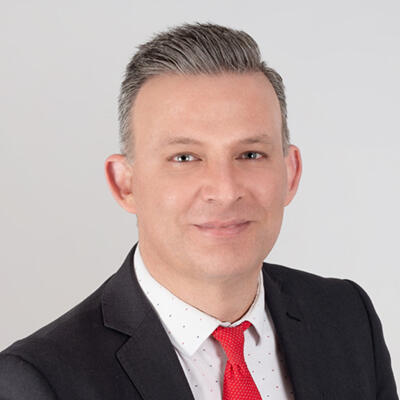
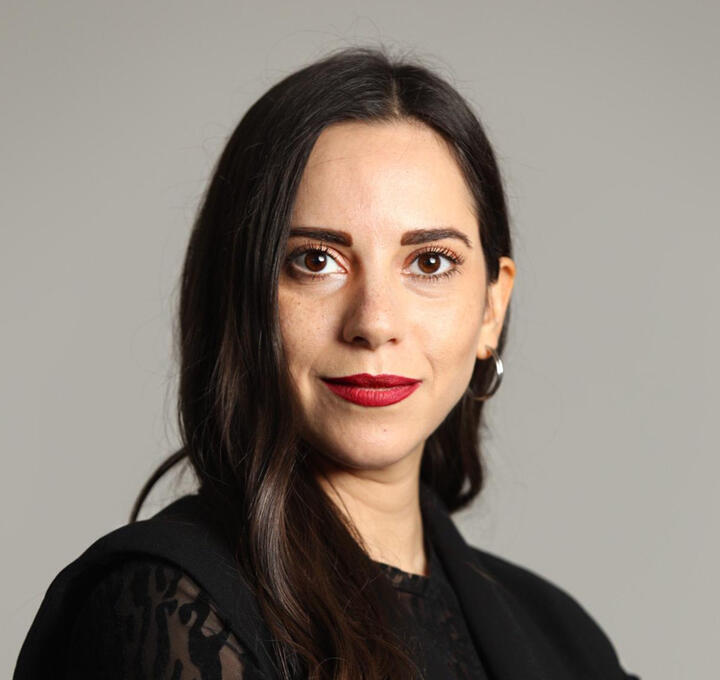
Dimitra Karakosta
Senior People & Culture Executive
or
Up Next
COMING NEXT
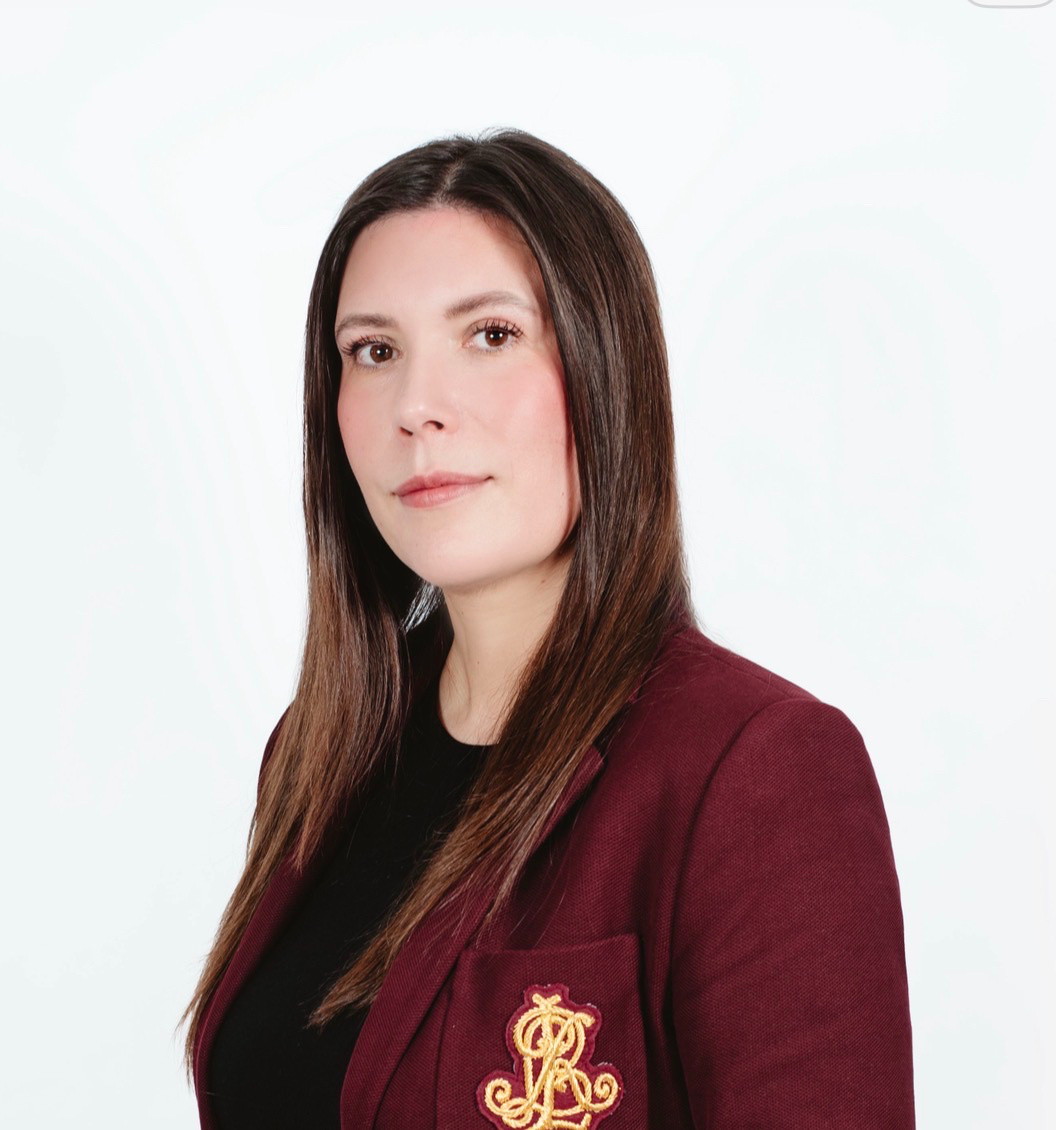
Anastasia Blekou
Human Resources Manager
"We Don’t Have a Culture Problem. We Have a Tolerance Problem."
Recent Voices
When you feel lost, start with your “why”
HR as the Engine of Business Transformation"
"When Agile re-engineers HR"
OR CLICK BELOW TO EXPLORE
or
Previous Affiliation Articles
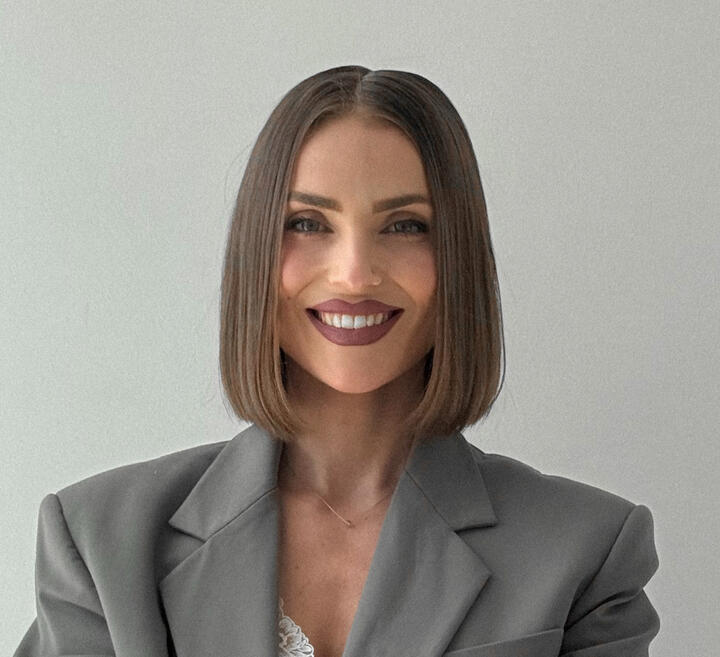
Periklis Hanna and Dimitris Antoniou
"What We Have Learned About Employee Benefits"
or
"When Agile re-engineers HR"
HR as the Engine of Business Transformation"
When you feel lost, start with your “why”




or check out
The Transformation Voice

When Agile re-engineers HR
“Start Stopping. Stop Starting.” - George N. -
People & Organizational Transformation Leader | September 1, 2026 · 8 min read
What a fascinating moment in business history to be in HR. And no, that’s not sarcasm. We are living in a time where HR is no longer just supporting the business. We are shaping it. Designing it. Influencing it. Exciting? Absolutely. Comfortable? Not even close.Every day brings new challenges, changing workforce expectations, business uncertainty, pressure for speed, constant transformation, AI entering the workplace. And yet, at the same time, we have more tools than ever before to help us evolve. But here’s the real question. Are we using those tools to redesign the future of HR… or are we simply trying to survive the chaos?If I had to paint today’s workplace, it would look like this. A highway full of traffic, lights everywhere, noise so loud you can barely think and movement happening all around you at impossible speed. And in the middle of it all? HR trying to hire faster, retain better, engage employees, support leaders, drive culture, manage change, and somehow still remain strategic. So how do we stop operating only reactively? How do we move from “firefighting mode” into truly designing the future of work?The answer came when I discovered Agile…Let’s clear this up immediately. Agile is not a magic wand. Not a trend. Not a set of ceremonies to make meetings feel more important. And definitely not something “only tech people do.” Agile is a mindset. A mindset of adaptability. A mindset of simplicity. A mindset of continuous improvement (Kaizen, if you want to sound fancy at lunch). Most importantly, it is the uncomfortable acceptance that the business and your stakeholders will change its mind faster than your PowerPoint deck finishes loading. Painful truth, right?Let’s be honest. How many of us have worked for months on a huge HR project only to realize at the end that the priorities had changed, the stakeholders wanted something different, or the solution no longer solved the real problem? Traditional approaches often assume certainty. Agile assumes chaos and change. And that changes everything.
For me, Agile means breaking down complexity into manageable actions. It means delivering value early instead of waiting for “perfect.” It means listening continuously instead of assuming. It means adjusting quickly instead of defending outdated plans.I once had to restructure a recruitment team at high speed. No time. Every day mattered. High pressure. Business survival-level urgency. Either we filled the open roles, or the entire business strategy would collapse. The team was working hard but there was no clear ownership, no visibility of workload, no standard process or documentation, no reporting. In reality it was not a team. It was semi-organized panic. And here’s the uncomfortable truth. Hard work without clarity is chaos and just an expensive confusion. So we had to rebuild everything. Not in theory but in reality. And this is where Agile became more than a concept.
One of the biggest Agile lessons is understanding simplicity. Sounds easy but it is not. This is where three powerful concepts changed my perspective. Muda, Mura, Muri.1. Muda – Eliminate waste
We mapped every recruitment step. Every single one. Even the “we’ve always done it like this” steps. And then we asked a brutal question. Does this create value… or just activity? Some findings were shocking. At one point, we had six interview stages. Six. Research (even Google’s) shows that after about three interviews, value barely increases. So we reduced stages, removed duplication, clarified ownership. And suddenly… recruitment started breathing again.2. Mura – Reduce inconsistency
You know this HR classic: “This role is urgent.” You drop everything. Then the hiring manager disappears or the role suddenly “is on hold.” So we introduced a new operating model. Two-week sprint planning. Every role was planned, prioritized, reviewed and committed. Could urgent roles still happen? Of course, but urgency stopped being an excuse for poor planning. And yes, at first it felt strict. Painful even. But here is the real question. Are you protecting temporary comfort… or building sustainable performance? The result? Better prioritization, more accountability, less confusion, faster delivery, healthier collaboration.3. Muri – Prevent overload
Are your people working sustainably? Or are your best performers constantly drowning?
When we reviewed recruiters’ capacity, one thing became immediately obvious. Our strongest recruiters were handling more than 50% of the open roles. The rest… were too much “available”. The “best people” become the solution to every problem. And called it efficiency. It wasn’t. It was burnout with a nice title. So we introduced capacity limits and role complexity scoring. One simple rule…Workload must be human-sized. Result? Less burnout. More ownership. Better quality. Healthier teams. “Funny” how people perform better when they are not exhausted.But it is not a one-person show. And with this I would like to introduce the second big shift. Stop designing alone. Here’s where things got uncomfortable. I used to think I was delivering great HR solutions. Turns out… the business sometimes disagreed. Why? Because I designed FOR people, not WITH people. That realization was uncomfortable. But transformational. And this is where I discovered the world of Design Thinking and Design Sprints. (For the book lovers “Sprint: How to solve big problems and test new ideas in just five days” by Jake Knapp, became one of the most practical guides I had ever read.)Back to our story. The challenge was clear - redesign recruitment to become faster, smarter, and less biased. Now imagine trying to perfect every detail before launching anything. We would probably still be discussing it today. So we started co-creating everything and decided to involve everyone. And when I say everyone…I truly mean everyone, recruiters hiring managers, employees, candidates, even newcomers who had just gone through the process themselves. A small but powerful shift.Another major learning? HR often struggles to gain buy-in because we speak in HR language instead of business language. The business does not invest in “nice ideas.” It invests in outcomes, value, impact, risk reduction, speed, growth. That is why tools like the Business Value Canvas became incredibly powerful for us.Before any project, we started asking ourselves:
• What business problem are we solving?
• What happens if we solve it?
• What happens if we don’t?
• How will we measure success?
• Who needs to be involved from day one?One of the most powerful Design Thinking principles is this. First, design the right thing. Then, design things right. Too many HR projects fail because teams jump directly into solutions. New platforms. New policies. New frameworks. Without fully understanding the actual problem.So we slowed down. We researched, observed, listened, mapped experiences and identified real pain points. Only then did we begin designing solutions. And suddenly something incredible happened. The business stopped feeling like “the audience.” They became co-creators of the change, of the (HR) transformation.Imagine this…One room, one challenge, people from different functions, sticky notes everywhere, ideas on walls, nonstop brainstorming, conversations happening openly, prototypes being tested quickly. Messy? Absolutely. Powerful? Extremely. Because innovation rarely looks organized in the beginning.Would you like an even deeper dive? Let's break the above approach into the following steps.
• Business challenge – Why are we doing this and what value will it create?
• Empathize - Deep dive into the employee experience.
• Categorise - Discover the moments that matter.
• Define - What is the problem we need to solve?
• Ideate - Brainstorm and challenge assumptions.
• Prototype - Turn prioritized ideas into simple, testable solutions.
• Test - Validate with users, measure value delivered, and decide next steps.Now comes the interesting part. What happens when a test fails? Nothing. Actually, something great happens. You just saved thousands of hours that would have been spent building a solution nobody needed. Because the purpose of testing is not to prove we are right. It's to discover we are wrong before the business pays the price. And when a test does not deliver the expected results? We go back. Maybe to Prototype. Maybe to Define. Sometimes all the way back to Empathize. That's not failure. That's agility.In our case, we did a lot of testing. Even more mistakes. And even more discussions. We spent three days in a room with recruiters, hiring managers, and stakeholders redesigning our recruitment process from scratch. Sticky notes everywhere. Whiteboards full. Coffee levels critically low. But the real value was not the workshop. It was the continuous involvement of stakeholders afterwards. Feedback stopped being an event. It became part of our DNA.The next challenge was simple: How do we keep delivering value? How do we stay aligned? How do we avoid falling back into chaos? That's where Kanban and Scrum came in.• Kanban helped us visualize the work. Think Trello boards, clear priorities, visible progress, and no more guessing who was doing what. We visualized the entire recruitment workflow through a Kanban board so every team member could track progress across all open roles.
• Scrum helped us deliver in small steps. Two-week sprints, planning sessions, daily 15-minute check-ins, reviews, and retrospectives. In simple words, do small chunks of work fast, learn, adjust, repeat.For me, this was the most valuable ceremony of all. The team reflected together what worked, what did not, what should we do differently next time? The goal was not perfection. The goal was improvement. Imagine improving your team's way of working by just 1% every sprint. Small? Maybe. Powerful over time? Absolutely. We even challenged ourselves to implement at least one process improvement during every sprint. One small improvement every cycle. No exceptions. That's Kaizen in practice.Do you remember the traffic analogy from the beginning? The noise. The pressure. The chaos. For me, Agile did not remove the traffic. The business is still changing. Priorities still shift. Challenges still appear. But Agile changed my relationship with the chaos. Instead of standing in the middle of the highway trying to stop every car, I felt like I was sitting comfortably in an armchair, calmly observing the traffic flow. Why? Because I stopped fearing problems. I had a system for dealing with them. And that, for me, is the real magic of Agile. Confidence. Confidence that whatever challenge appears tomorrow, your team has the tools to adapt.And if I could leave you with one final piece of advice, it would be this…Start Stopping. Stop Starting. Because sometimes the biggest obstacle to progress is not what we are not doing. It's everything we are trying to do at the same time.
George Neofotistos for Top HR Voices of Greece
• • •
About George Neofotistos:
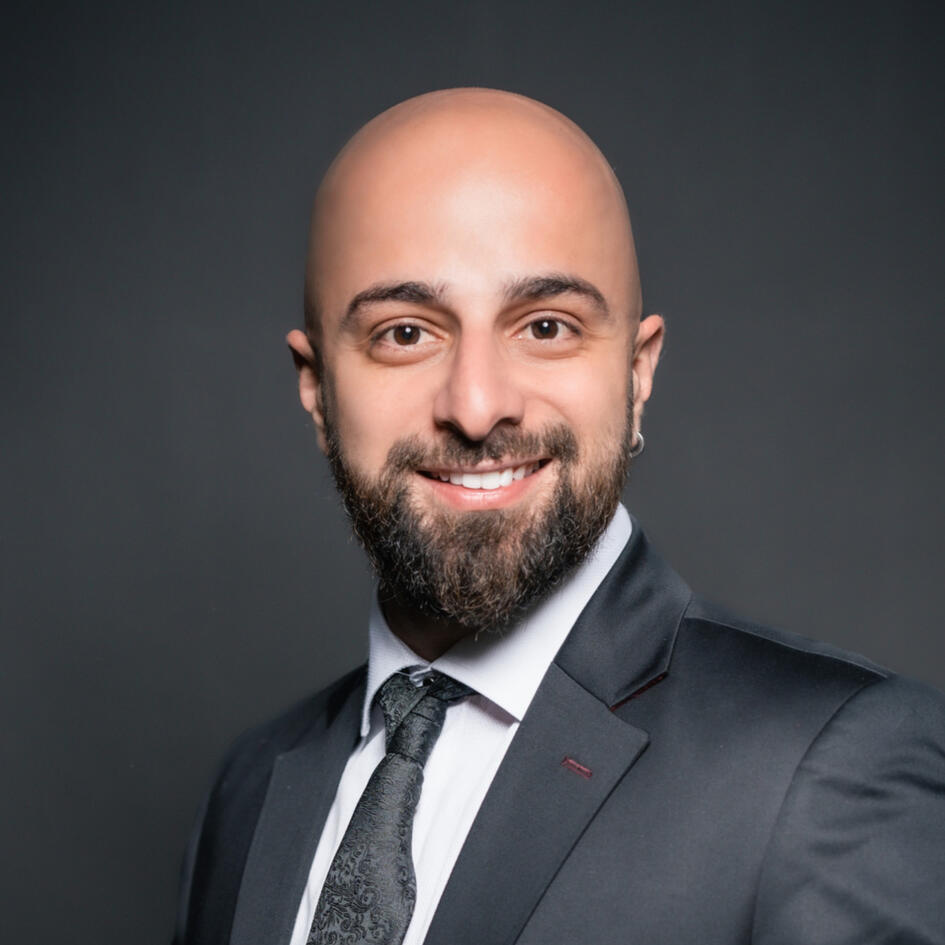
George Neofotistos is a People and Organizational Transformation Leader with experience helping multinational and high-growth organizations navigate growth, digital transformation, and workforce evolution. He specializes in redesigning people functions, operating models, and talent ecosystems to drive business performance, organizational agility, and sustainable growth. Aditionally, he also act as an AI pioneer by bringing change from mapping and building the operational backbone to build a sustainable AI architecture ready organization especially from people capability with main goal the modernization of HR as a strategic business function.An advocate of Agile HR, AI-enabled transformation, and modern workforce practices, George is recognized for challenging traditional HR approaches and promoting a product-oriented mindset within people organizations. His expertise spans HR strategy, organizational design, career architecture, workforce transformation, people analytics, talent development building AI-ready organizations with a strong focus on leadership enablement.His academic foundation is in Finance, followed by a Master’s degree in Human Resources Management. He is a certified PHRi (HRCI) professional and among the few Certified Agile HR Practitioners in Greece. He has further strengthened his expertise through executive education in Organizational Design for Digital Transformation at the MIT, underscoring his commitment to cutting-edge, globally recognized thought leadership in organizational transformation. He actively contributes to initiatives that empower the next generation of HR professionals and remains dedicated to shaping the future of the profession.
George Neofotistos
People & Organizational Transformation Leader
or
The Practical HR Voice

From Process to Performance: Building HR That Works in Practice
“HR does not fail because it does not know what to do. It fails because it is not grounded in reality.” - Alexandros M. -
Human Resources Manager | August 13, 2026 · 5 min read
If there is one thing I have come to understand from working alongside frontline teams, it is this: most HR strategies look right on paper, but they do not work in everyday reality.Having worked across both industry and retail, I realised that HR is not judged in meeting rooms. It is judged where everything happens at once, on the production line and on the shop floor.At 07:00 in the morning, in an industrial environment, before the shift has even started, the first tensions have already surfaced. Last minute absences. Delays. A new employee who still does not know the workflow. A supervisor trying to cover gaps so that the line does not fall behind.A few hours later, in a retail store, the pressure looks different, but it is just as intense. Customers with demands. A pace that never slows down. A sales advisor who must serve, recommend, and manage tension at the same time. And a store manager expected to maintain balance between targets and team dynamics.Two different worlds. The same reality.There is no time for theory. There is only one question: does it work, or does it not?These were the environments I found myself in. There were processes, but not consistency. There were training manuals, but they were not being used. There was communication, but it was not truly reaching people in a meaningful way. And performance? It depended more on individual effort than on a system that genuinely worked.That is where something became clear to me: HR does not fail because it does not know what to do. It fails because it is not grounded in reality.So instead of adding more policies, I focused on something simpler, and much harder: making HR functional under the pressure of everyday operations.We started with onboarding. Not as a formal first day, but as real integration into the role. In industry, next to the line. In retail, inside the store. With clear stages, first week, first month, three months, and one essential criterion: can this person stand on their own?From there, we moved to the structure of the day.Daily briefs before the shift, or at the end of the store week. Clear responsibilities. Checklists that were not just paper for ISO purposes, but real tools that helped the team operate under pressure. Communication flows that reduced the familiar “no one told me” and “I did not know.”And then something interesting happened.People did not resist structure. They embraced it.Because whether you are on a production line or standing in front of a customer, clarity is not control. It is support.At the same time, I realised that culture does not change through presentations. It changes in daily behaviour, in how you speak, how you correct, and how you recognise people.In industry, this showed itself through greater consistency and stronger collaboration. In retail, through the customer experience and the energy of the team.We started speaking more. Not formally, but meaningfully. Briefly, directly, without filters. Feedback became part of the daily rhythm.Was everything easy? No.There were days when nothing went as planned. Days when the pressure of production or the customer simply tore theory apart. But that is exactly where HR is tested.Not when everything runs smoothly. But when things still need to work inside the chaos.I believe HR in Greece needs to move from a supportive role to one that directly shapes performance. Not through more frameworks, but through a deeper understanding of the work itself.Because at the end of the day, HR is not policies, engagement initiatives, or theory.It is the ability to make things work where they actually happen.On the line. In the store. In practice.And when that happens, performance is not enforced.It emerges.
Alexandros Manolis for Top HR Voices of Greece
• • •
About Alexandros Manolis:

Alexandros Manolis is a Human Resources Manager with experience across industry, retail, and multi site working environments. His professional approach focuses on making HR work in practice, connecting processes to day to day operational reality, and building structures that support consistency, performance, and sustainable growth.He brings experience in HR operations, payroll administration, employee relations, workforce planning, onboarding, compliance, and multi site HR management, with strong knowledge of Greek labour law and the relevant tools and frameworks.
Alexandros Manolis
Human Resources Manager
or
The Humanist's Voice

HR Begins Long Before the HR Title
"If HR is meant to represent people, then it benefits from professionals who have stood in different roles before entering the field." - Marianna M. -
Human Resources Generalist | July 20, 2026 · 5 min read
I didn’t come into HR through a straight line, and for a long time, I didn’t think that mattered. Before my role today, I worked in customer service, hospitality, and support environments where results are immediate, pressure is constant, and people rarely show up as polished versions of themselves. They show up tired, frustrated, demanding, grateful, emotional. Working so closely with people teaches you quickly that no script survives real human interaction. At the time, I didn’t realize that these experiences would become the foundation of how I practice HR today. Looking back, they shaped my instincts far more than any job title that followed.Customer facing roles teach you how to stay present in discomfort. You do not get to hide behind procedures or carefully worded responses. You learn to listen closely, regulate emotion, de-escalate tension, and communicate clearly while managing your own reactions at the same time. Long before I gained the knowledge of professional frameworks, I was already learning how people behave under pressure and what helps them feel seen, understood, or safely heard. Studying Psychology helped me put structure and language around what I had already experienced in practice. It reinforced the understanding that behaviour always makes sense within context, even when it is difficult or uncomfortable. It also taught me that empathy does not mean agreement, and understanding someone does not require abandoning boundaries.When I moved into HR, I quickly realized that many of the most important moments in this profession do not happen within systems or policies. They happen in conversation. In my current role as an HR Generalist, I work across administration, compliance, employee engagement, and internal communication. I manage systems and policies daily, but the moments that stay with me are human. Moments where someone is unsure whether it is safe to ask a question. Moments where a manager is trying to balance expectations with care or when a new hire is learning how things work.One belief continues to guide how I approach these moments. People often appreciate honesty far more than certainty. Saying “I don’t know yet” or “We were mistaken, let’s fix this” builds more trust than trying to always appear right. People sense when information is forced or over polished. Honest communication, even when answers are incomplete, creates psychological safety and long term credibility. In my experience, trust grows faster when professionals no matter the position or field allow themselves to be human, transparent, and willing to correct course.Empathy, listening, and asking thoughtful questions have proven to be some of the most practical tools I carry with me. Especially as a young professional or when working with people you do not yet know well, these skills matter more than positional authority. Listening without preparing a response and asking questions with genuine curiosity changes the tone of any interaction. It signals respect rather than uncertainty and invites collaboration rather than defensiveness. Over time, this approach builds trust organically. It is of no coincidence that the most sought out skill for leaders is giving space to your people.The transferable skills I brought with me into HR did not remain static. They continue to evolve as I grow and as my environment changes. Patience learned through repetitive and emotionally demanding interactions. Observing how people communicate, not only what they say, but how they say it. Paying attention to tone, pace, and style, and adjusting my own communication accordingly. Sometimes mirroring someone’s communication style helps create flow and reduce friction, not to agree blindly, but to keep dialogue constructive and meaningful. Soft skills are not fixed traits. They adapt, deepen, and mature throughout a career.Early on in Psychology, we learn something fundamental. Theory was never meant to be followed exactly as written. People are not predictable in that way, nor are they copies of one another. Models help explain patterns and create structure, but they cannot capture the full complexity of human behaviour. The same applies in HR. Theoretical frameworks help us understand how systems tend to work and what usually matters most, but they were not created to deliver identical answers in every situation. Their role is to guide prioritization, not to dictate behaviour.In my short professional career, I have come to believe that any meaningful lesson learned can apply across many professional fields and even everyday life. Workplaces are dynamic social systems shaped by relationships, emotions, power, history, and culture. Learning within these systems is never passive. It requires engagement, experimentation, and continuous adjustment. Trying things also means that mistakes are part of the process, not exceptions. They are scheduled into growth. This is why calculated risk taking is a rule I follow and something I believe is essential for every young professional. Progress rarely comes from waiting for certainty. It comes from thoughtful action, reflection, and the willingness to adapt.If HR is meant to represent people, then it benefits from professionals who have stood in different roles before entering the field. Experiencing uncertainty, unclear communication, pressure, or power imbalance first hand creates awareness that no training alone can provide. This matters even more in Greece, where workplaces are evolving rapidly and expectations continue to shift. HR cannot afford to be distant or performative. It needs to be grounded, honest, and human in daily practice.It is important to understand that growing into any role does not require leaving previous experiences behind. Instead, it teaches you how to bring them forward with intention. I practice HR shaped by listening before acting, honesty before certainty, and learning before control. I believe credible HR is built by people who remain open to change, unafraid of mistakes, and grounded in real human experience. Not because this path is unconventional, but because it is honest. And honesty is what allows HR to remain relevant, trusted, and truly human.
Marianna Maragkou for Top HR Voices of Greece
• • •
About Marianna Maragkou:

Marianna Maragkou is an HR Generalist at insurancemarket (Achmea Group), where she works across people operations, employee experience, recruitment, and employer branding.With academic foundations in Psychology and Strategic Human Resources Management, she brings a human-centered perspective to HR, combining behavioural insight with practical people strategy.Passionate about workplace culture, trust, and authentic communication, she believes the most effective HR begins with listening before leading.
Marianna Maragkou
Human Resources Generalist
or
The Ethical Recruiters Voice

The Global Talent Mirror: What Greek Hiring Misses, and What Europe Already Knows
"Greek employers must realise that how you treat a candidate is a direct preview of how you will treat them as an employee." - Georgia P. -
Career Coach & HR Consultant · July 7, 2026 · 6 min read
Having spent years driving talent acquisition across the fast-paced, candidate-centric markets of the UK, the Netherlands and across all Europe, returning to the Greek hiring landscape felt less like a geographical shift and more like a step back in time. In the UK, talent acquisition is treated as highly structured, followed by the law, and obsessed with candidate experience. In the Netherlands, it feels more like a collaborative partnership, built on radical transparency, more flat hierarchies, and an acute respect for work-life boundaries.And now, Greece. As a Greek HR professional who returned home after years abroad, I wanted to believe that the local market had evolved at the same pace as its European counterparts. And in some ways, it has. We have brilliant minds, unparalleled resilience, and a growing tech and business ecosystem. But as I embedded myself back into the local landscape, a frustrating reality became clear: when it comes to hiring, many Greek companies are still playing by rules written two decades ago.However, if Greek employers want to reverse the brain drain and position themselves as competitive hubs for top-tier talent, the path forward requires looking into the global mirror. There are fundamental shifts in the hiring paradigm that European markets now take for granted, which present a powerful opportunity for Greek companies ready to adapt. To close the gap and build a truly resilient, competitive talent ecosystem, Greek employers should look closely at the four foundational pillars of modern recruitment that I will be analysing below:
1. The Candidate Experience: Treating Talent as a Customer, Not an ApplicantIn hubs like London and Amsterdam, recruitment is treated as an extension of a company’s brand. European employers track candidate Net Promoter Scores (cNPS) with the same rigor they track customer satisfaction, knowing that a clunky interview process can actively damage their reputation. Every touchpoint is designed to be efficient, engaging and respectful.In Greece, however, candidate experience is too often treated as a secondary priority. Professionals frequently face lengthy communication gaps, unpredictable scheduling and delays and a lack of feedback. When a hiring process stretches on for weeks without updates, it signals a lack of organisational agility. Greek employers must realise that how you treat a candidate is a direct preview of how you will treat them as an employee. Shifting from a transactional process to a candidate-first journey is the fastest way to stand out!
2. Sourcing vs. Waiting: The Active Cultivation of TalentOne of the sharpest contrasts I’ve observed is how talent is acquired. A lot of Greek companies still rely on "post-and-pray", putting a job ad on a job board and waiting for resumes to roll in. When they don't get the right profiles, they blame a "lack of talent in the market."My time in the UK taught me that the best talent isn't actively looking at job boards. They are passive. To hire the best, you have to hunt. You have to build talent pipelines, engage in community sourcing and pitch your company to them.Furthermore, when Greek companies do source, they often look for the "purple squirrel", a candidate who ticks 100% of the boxes, has a specific degree from a specific university, and is willing to accept a mediocre salary. Western European markets shifted long ago toward hiring for potential, learning agility and cultural add. They understand that skills can be taught, but intrinsic motivation and adaptability cannot.
3. Culture is Not an extra employee benefit (It’s Flexibility and Trust)There is a profound misunderstanding of modern workplace culture among many Greek employers. Many think that adding an extra employee benefit or hosting a summer party means they have a "modern company culture."But when you look at what talent actually values, especially the younger generation and expats, it comes down to two words: autonomy and flexibility.In the Netherlands, remote and hybrid work isn't a perk; it’s a baseline expectation. Trust is granted by default until proven otherwise. In Greece, however, I still see a persistent, anxious fixation on presenteeism. Managers still want "eyes on seats." Micromanagement is disguised as "quality control," and hybrid models are often granted grudgingly rather than embraced as a tool for productivity. If you require top talent to sit in Athens traffic five days a week just so a manager can watch them type, you will lose them to a remote-first European competitor every single time.
4. The "Internal Talent" Blind SpotHiring doesn't end when the contract is signed. European talent markets place immense weight on onboarding, continuous development and clear career mapping. They know that retention is the cheapest form of recruitment.In Greece, onboarding is frequently an afterthought, a quick office tour, a stack of paperwork, and a "good luck, let me know if you have questions." Employees are often left to navigate ambiguous organisational structures on their own. Without clear paths for upward mobility, talent stagnates, grows frustrated, and eventually logs onto LinkedIn to find a company, likely remote or abroad, that will invest in their growth.
The Shift We Need to MakeFixing these mistakes doesn't require a massive budget; it requires a shift in mindset.
Greek employers need to stop viewing HR as an administrative, bureaucratic function and start viewing Talent Acquisition as a strategic business partner. We need to treat candidates like consumers. We need to be honest about compensation, efficient with our interview timelines, and courageous enough to manage through trust rather than control.I returned to Greece because I believe in the potential of this market. We have the grit, the intelligence, and the passion. But talent is a fluid, global commodity. If Greek companies want to keep our brightest minds home, and attract global professionals to join them too, we have to stop recruiting like it's 2006. It's time to build a hiring culture that mirrors the maturity, respect, and sophistication of the global stage.
Georgia Papageorgiou for Top HR Voices of Greece
• • •
About Georgia Papageorgiou:
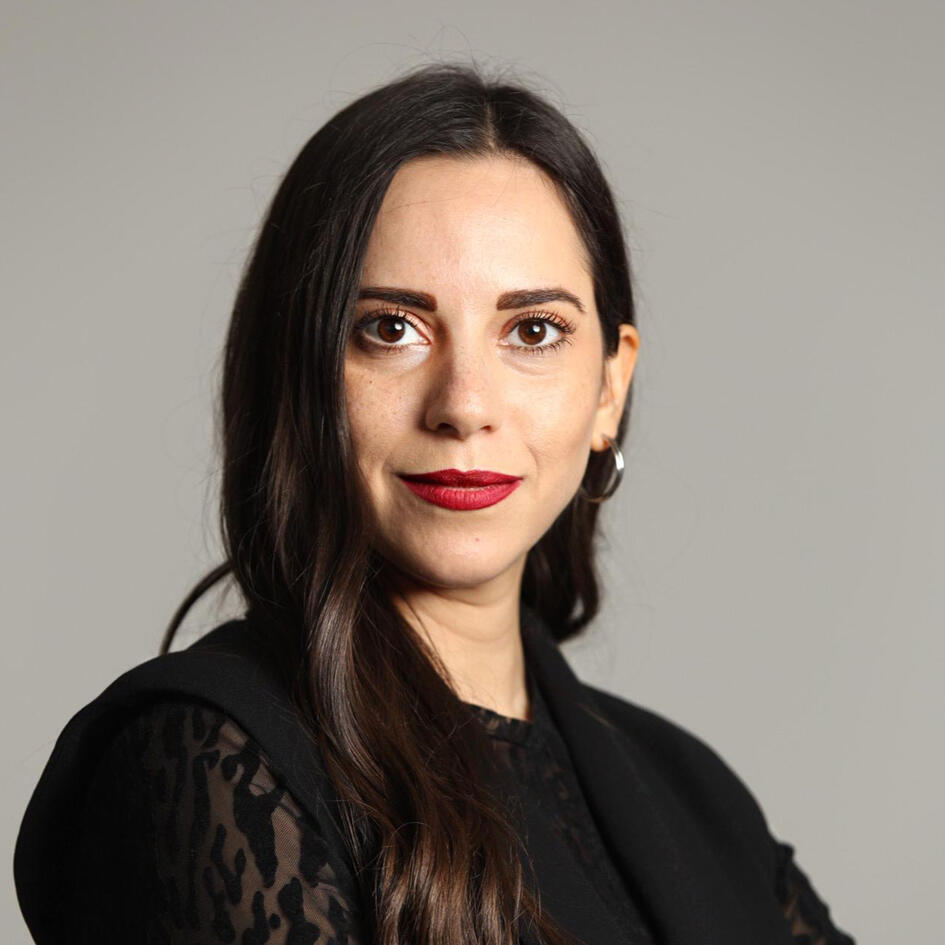
Georgia holds a BSc in Sociology and an MSc in Human Resource Management and Business. She is also CIPD qualified, holding a Level 7 Diploma in Human Resource Management.She has extensive experience in Human Resources, with a strong specialisation in Talent Acquisition, an area that has proven to be her true passion! Over the course of her career, she has reviewed more than 340,000 CVs, conducted over 5,000 interviews, and successfully completed more than 450 hires across Europe. Also, throughout her career in HR and Talent Acquisition, she has designed and delivered numerous corporate trainings.Georgia lived and worked in the UK for 4 years and in the Netherlands for 5.5 years, applying her expertise primarily across Europe, as well as on a global scale. After 9.5 years abroad, she decided to return to Greece to share her knowledge locally and support Greek businesses.She has led recruitment across all levels of seniority, from graduate roles to C-level positions, and has worked across a wide range of industries, including Manufacturing & Engineering, Telecommunications, SaaS, Finance, Hospitality & Customer Service, Video Gaming, IT/Software, and Sustainability.Driven by her passion for people and career development, Georgia is the Founder of WhatzNext, where she provides Career Coaching services and supports organisations as an HR Consultant. She likes to play to her strengths and she loves to help others do too!
Georgia Papageorgiou
Career Coach & HR Consultant
or
The Transformation Voice

How HR Becomes the True Engine of Business Transformation
"HR has stopped being a cost center and became the sharpest engine of transformation."
- Evgenios Z. -
Head of People & Culture · June 11, 2026 · 7 min read
I’ve spent enough years in HR to know the good old script by heart. HR used to be the polite people (you can replace the “polite” with “strange/cult”) in the corner office handling paperwork and the occasional team-building activity that everyone secretly rolled their eyes at. “Support function.” That’s what they called us; and maybe it was deserved too. Polite code for “necessary but not strategic.”I never agreed with that. As an HR Leader in a company that’s transforming fast in a brutally competitive global market, I refuse to accept the idea that HR is adjacent to the business. HR IS the business; because companies are not lines of code or P&L columns, but humans making things happen. HR has stopped being a cost center and became the sharpest engine of transformation. This isn’t theory. It’s what we’re striving for!Let’s be honest: most companies still treat these four elements as separate initiatives. Random org changes, AI initiatives in a vacuum, “performance” used as a buzz word thrown around more for administrative theater rather than real change.The result? Fragmented efforts, frustrated people, and transformation that stalls before it starts.
Organizational Design as Living StrategyTrue organizational design isn’t about boxes and lines on a slide. It’s about building the exact human architecture that lets your strategy win: putting the right people in the right place.Structure then, is a strategic tool. HR can’t wait for the mandate. We must sit at the table from minute one, asking the uncomfortable questions: What capabilities do we actually need? Where are we over-layered? What does this person have to offer in this role? Is this new role needed? What is the impact?I’ve challenged leaders and founders more than once. “If this new structure doesn’t make our best people 10x more effective, why are we doing it?” It creates tension. Good. HR leaders who only say YES and never challenge are complicit. We owe the business friction when it’s necessary; and if you’re transforming and you don’t get friction, it probably means that nothing is changing.
AI Adoption That Actually Empowers HumansThe AI conversation in most companies is still poisoned by fear or hype. Some leaders see it as a headcount reduction tool. Others treat it like magic that will solve everything (remember when SAP and HRIS systems were the magic pill?).We position AI as a force multiplier for human potential so our people can focus on what machines still can’t do: build trust, navigate nuance, spark creativity, and make ethical calls in ambiguous situations.Our HR team won a Hackathon with an idea born before AI was cool, answering old questions in a new way: “how do we remove the administrative burden from development planning and give that time back to meaningful conversations with people?”I’ve said it before in public forums: I want AI to do the manual labor so humans can focus on the art; AI can cut the marble from the rock so Humans can shape it into a marvelous statue. Heresy in an AI-crazed world? Maybe. I still vouch for humans.We’ve deployed AI agents that dramatically accelerate routine coding and analysis, but we pair every implementation with intense focus on human judgment. The uncomfortable truth? AI will expose gaps faster than anything else.If your managers can’t inspire people beyond what a chatbot can do, they won’t survive. AI doesn’t replace humans; it raises the bar for them.
Leadership Discipline as the Non-Negotiable CoreHigh performance without leadership discipline is just burnout wearing a productivity mask. Leadership accountability must be a core part of our operating system. Every leader must have clear, measurable commitments around both results and how they get them; and this needs other leaders to support and challenge.I’ve sat across from talented but ego-driven managers and asked the hard questions; because a system is as strong as its weakest spots. If HR cannot challenge the leaders – the most impactful humans in the organization – who can it challenge?Some call this tough or “politically incorrect”. I call it honest. We support our leaders fiercely — coaching, development, air cover when they take smart risks — but we also hold the mirror up without flinching.
High Performance as a System, Not a Slogan (or another magic pill)The real magic happens when these pieces click together. Org design creates clear accountability. AI removes friction. Leadership discipline ensures the human element stays strong. And high performance becomes the natural outcome: people who know exactly why their work matters, who have the tools and autonomy to move fast, and who are led by humans worth following.We believe performance must be approached holistically. We measure it through a mix of hard metrics (output, outcomes, impact) and softer but critical signals (mindset, culture, growth). We must measure the What but also the How. When one part slips, the whole system signals early.
Preaching rebellionIf you’re in HR and reading this, I hope you feel a little provoked. Stop waiting for a seat at the table. Build the table and make sure the pieces are there; otherwise, you’ll just be the first pawn to go so the Bishop can play the gambit with the Queen.Question the legacy processes that waste everyone’s time. Push back when short-term thinking threatens long-term capability. And above all, remember we are not the department of nice policies or the irrelevant ideas. We are the department of competitive advantage through People.The companies that win in the next decade won’t be the ones with the most advanced AI or the slickest org charts. They’ll be the ones where HR had the courage to integrate everything into one living system. A system built for empowered humans.HR won’t move the needle with policies or processes, but through HR leaders willing to operate as architects of business performance, not observers.
That’s not the future of HR. That’s Now.
Evgenios Zogopoulos for Top HR Voices of Greece
• • •
About Evgenios Zogopoulos:
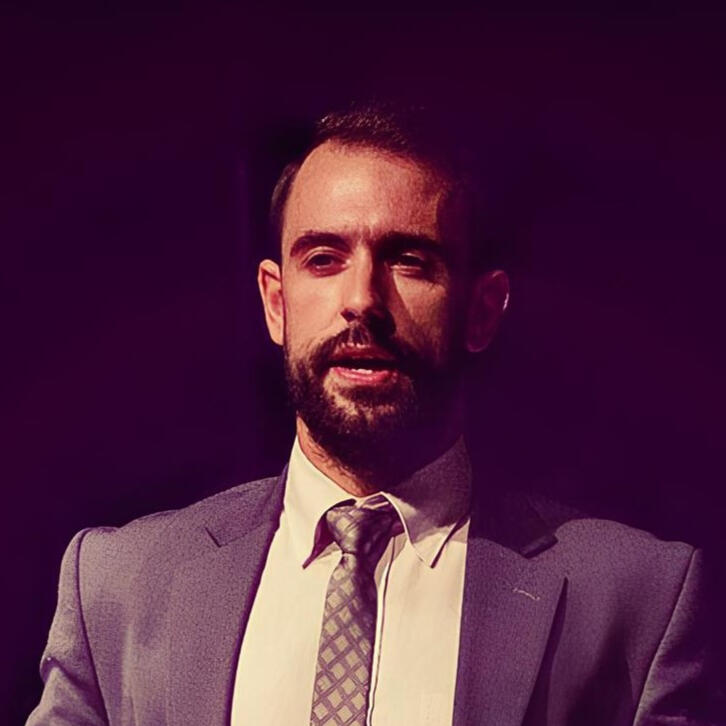
Strategic and transformational leader with a strong Business mindset and a proven record of driving organizational change. Expert in optimizing People, Culture, and Operations through technology, data, and human insight.Trilingual communicator with MBA and Psychology background, blending analytical thinking with deep interpersonal understanding. Navigates international, complex and fast-paced Tech environments, consistently solving big problems and delivering impact.Recognized for decisive leadership, organizational rigor, and Innovation.
Evgenios Zogopoulos
Head of People & Culture at T-Digital by Deutsche Telekom
or
The Resilient Voice

When you feel lost, start with your “why”
“In times of uncertainty, people don’t need perfect answers. They need honesty. They need direction. They need to be reminded of their ‘why.’”
- AnastasiaT. -
Chief Administrative Officer & HR Manager · May 8, 2026 · 7 min read
It wasn’t an easy period.
Not in the way people casually describe difficulty, but in a way that sits quietly on your shoulders and follows you throughout the day.
The Board of Directors had recently been dissolved.
The company was at a pivotal growth point in the market, facing a transformation that required cohesion, structure, and organization, things we simply did not fully have yet.
At the same time, we were preparing for our relocation to a new operational base: the first private airport in the country. A milestone full of promise, but also one that demanded focus, alignment, enormous operational effort, and a fundamental shift in our operational practices, habits, and way of thinking.
And all of this after the Covid period.
After restrictions.
After exhaustion.
After losses.
With a team that was tired from limitations, uncertainty, and the emotional weight of everything we had collectively gone through.
People didn’t know what to expect. And that uncertainty wasn’t loud. It was subtle, persistent, present in every conversation and every silence.
There was uncertainty about leadership, about the future, about stability.
Questions without clear answers. Concerns without a timeline.
And me?
I was right in the middle of it.
Head of HR, but also a human being who felt tired, confused, and, at times, lost.
While I was seeing crisis, my CEO was seeing opportunity.
Both perspectives were real!
And somewhere between the two, I found myself conflicted, trying to reconcile what I felt with what I was expected to see.
I won’t pretend otherwise.
I allowed myself to feel it.
Up to a point.
Up to the point where I didn’t give up.
Almost unconsciously, something I had read years ago came back to me. Something that hadn’t meant much back then. Something that had felt distant, almost abstract.
“Start with WHY.”
And my “why” was my cause and belief in a company that, when I first joined, was small but carried a vision that truly inspired me.
A vision to build an innovative, reliable general aviation ecosystem, something that doesn’t currently exist in Europe, led by passion and integrity, not just ambition.
That’s where everything started.
Not with the “how.”
Not with the “what.”
But with the “why.”
I started working on the structure.
Not just a new org chart.
Not just lines and titles.
But a shared understanding of responsibility and accountability, something we didn’t truly have at the time.
Something that needed to be built, not imposed.
I explored different organizational models, not to copy what others were doing, but to find what genuinely fit who we were becoming, not who we had been.
The goal wasn’t complexity.
It was clarity.
The kind of clarity that removes friction and creates direction.
I opened my email.
Clicked “compose new message.”
Addressed it to the two CEOs.
From there, and through a lot of shared work, alignment, discussion, and interaction, the current leadership model was built:
• A C-Suite structure with four roles: CFO, COO, CCO, CAO
• Clear lines of accountability
• Consolidation of “orphan” functions, HR, IT, Legal, under the CAO
• Creation of Procurement and Corporate Governance functions
But structure alone is not enough.
It never is.
We realized something critical:
If you want to grow, it’s not enough to organize people.
You need to organize the business itself.
The way it operates.
The way it scales.
So, we made a decision that initially felt unnecessary, especially since our operational entities were already heavily compliant with European regulations and approved by the competent Civil Aviation Authorities.
We moved forward with ISO process standardization.
Not for the certification.
But to create consistency, clarity, and repeatability in the business.
To build a strong core that could support operations scaling almost aggressively, faster than informal structures could sustain.
We also did something that isn’t always obvious.
We invested in new people with fresh perspectives.
People not shaped by the old habits we were trying to leave behind.
People dedicated entirely to this effort and fully aligned with the direction we wanted to move towards.
And they did it exceptionally well.
At the same time, we introduced technology to support this transformation: ERP, HRMS, and a performance management system.
Not just to digitalize.
But to bring transparency, data-driven decision making, and alignment into the way we operate.
To make the invisible visible.
Because strong organizations are built by people, enabled by systems, technology, and automation.
Standardization is not a limitation.
It is what allows you to grow without falling apart, without losing control as complexity increases.
But the hardest part was something else.
We took responsibility for the fact that some people, although excellent professionals and high performers, had been promoted without being properly equipped to lead.
A reality that is more common than we admit.
And we chose not to lose them.
So, we invested in them, consciously and intentionally.
We designed a one-year leadership development program for 12 of our managers and key staff.
Not theoretical training.
Real work:
• blended learning experience
• simulations
• customized scenarios
• feedback
• conflict
• understanding each other’s roles
Somewhere along the way, something shifted.
Not because we “learned something new.”
But because we started to truly understand each other beyond roles and titles.
People stepped into each other’s shoes.
And collaboration changed.
Less ego.
More awareness.
More empathy.
More intention in how we worked together.
Two years later?
I won’t say “we made it.”I’ll say we are on the right runway.
• We have structure.
• We have a shared language.
• We make better decisions together.
• We have become a stronger, more aligned team.
And most importantly, we have resilience.
The kind that is built, not assumed.
If there’s one thing I take from this experience as an HR professional, it’s not the models.
It’s not the org charts.
It’s this:
In times of uncertainty, people don’t need perfect answers.
They need honesty.
They need direction.
They need to be reminded of their “why.”
This was not the first wave of uncertainty we had to navigate.
And it probably will not be the last.
But I realized that uncertainty does not only challenge us.
It can also bring us closer to our purpose.
And as long as my “why” stays alive, I know I will always find a way forward.
Anastasia Toulaki for Top HR Voices of Greece
• • •
About Anastasia Toulaki:
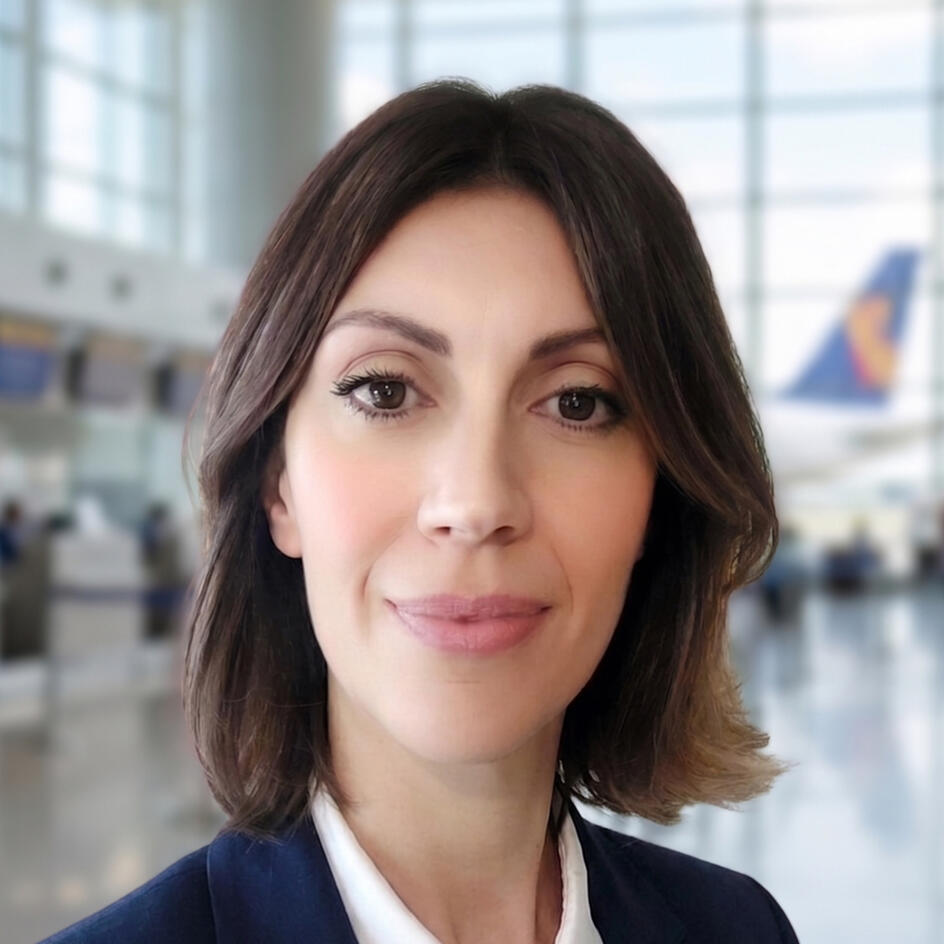
Anastasia Toulaki is an experienced Human Resources and Corporate Administration executive with over 25 years of experience in the aviation industry. She currently serves as Chief Administrative Officer at Egnatia Aviation and holds a long-standing role as Human Resources Manager, with expertise across the full-spectrum of HR Operations, including recruitment, onboarding, payroll oversight, performance management, employee relations, HR policy development, and EVP initiatives in HR Operations, organizational transformation, employee relations, performance management, policy development, and EVP initiatives.She has contributed to business development and operational excellence through strategic projects in administrative standardization, corporate governance, procurement structure development, technology implementation, and digitalization. Her career began at Aegean Airlines, where she gained strong operational and managerial experience as Station Supervisor and Station Manager. She holds specialized certifications from the National and Kapodistrian University of Athens in Human Resources Management and Entrepreneurship & Strategy Development under Uncertainty and is a four-time HR Awards winner.
Anastasia Toulaki
Chief Administrative Officer & HR Director
or
The Inaugural Voice of Greece: The Negotiator’s Voice

When You Stand Between Two Sides: Leadership in Negotiation Is Not About Winning — It Is About Ensuring No One Loses
“You do not negotiate to win. You negotiate to create an outcome that lasts.”
-GerasimosC.-
Chief Human Resources Officer (CHRO) · April 17, 2026 · 4 min read
When I took on the role of HR Director in the company, I immediately found myself at the center of an intense conflict. On one side, management. On the other, the employees’ union. In the middle, an arbitration decision that—if fully implemented—could derail payroll costs and effectively blow up the company’s budget.In real terms, we were discussing a financial burden that could increase monthly payroll to levels that were not sustainable for the company’s operation. And I, new to the organization, found myself needing to deliver a solution as fast as possible. But, not to a theoretical disagreement, but to a real conflict with immediate financial, operational, and human impact. These are the moments where HR is not simply called to “manage” a situation, but to truly stand at its center and influence its outcome.The reality was clearly confrontational. The union demanded full implementation of the decision. Management refused, relying on a legal “loophole.” Trust between the two sides was low. And the most dangerous element was that neither side was truly listening. Each side came to the table not to understand, but to defend its position. And that is usually the point where a negotiation stops being a process of resolution and becomes a mechanism of escalation.My approach was clear from the beginning. I did not enter the negotiation to impose. I entered to understand. I started with something simple but rare: I described the conflict objectively, without taking a position. Then I asked in depth, listened without interruption, and confirmed that I had understood correctly. This step is often underestimated, but it is critical. Because there is a truth that is frequently overlooked: most conflicts do not start from disagreement. They start from misinterpretation. From incorrect reading of intentions. From lack of trust. From the certainty that “the other side” is not acting in good faith.From the very first moment, my stance was clear. I was not interested in being liked. I was interested in being credible. And most importantly, in contributing to a solution that could endure over time. Because you do not negotiate to win. You negotiate to create an outcome that lasts. That was the real objective for me. Not a temporary “closure” of tension, but an agreement that would not generate the next crisis from the first day of its implementation.When I returned to management, I did not simply transfer the problem. I proposed alternatives. Because every serious negotiation follows one rule: if you do not have options, you do not have negotiation. You have a dead end. And the difficult balance was exactly there. The proposal was clear: not to fully implement the arbitration decision, but to provide targeted elements, such as allowances, in order to create balance. In simple terms, the company should not lose. But the people should not lose either.When I returned to the union, I maintained a clear line. Honesty. Clear positioning. No ambiguity. I communicated directly that some things could not change, but some things would move forward. And this clarity mattered. Because in such moments, even when you are not telling everyone what they want to hear, you can keep the dialogue alive if you speak with clarity and without games.The harsh reality of negotiation is that there is not always room for comfort. There was tension. There was conflict. And there was a moment where, if the negotiation had collapsed, the company would have faced a financial burden significant enough to directly affect its viability and operational stability. This is where your role is defined. Not when everything goes well. But when you know that a wrong move carries real consequences. When you must keep the process balanced while both sides test its limits.Ultimately, the agreement was reached. And the outcome was meaningful. The company avoided a significant and disproportionate financial burden. The employees received tangible benefits. Tension de-escalated. Trust began to build. And most importantly, we moved from conflict to cooperation. Not perfectly, not automatically, but substantially.The real impact does not lie only in the outcome of the agreement. It lies in what followed. The union began to trust the process. Communication became more direct and honest. The relationship remained positive even after my departure. From being perceived as the “black sheep,” I became a point of reference of trust. And this is often the most silent, yet most substantial proof that the approach worked.The essence of leadership in negotiation is simple. Negotiation is not a battle. It is a responsibility. It is not about pushing, imposing, or winning. It is about understanding, balancing, and creating a solution that lasts. A solution that does not humiliate one side so that the other can feel it has won. A solution that allows the organization to continue operating and people to continue trusting that there is space for serious dialogue.In HR, especially in such moments, you are not an “intermediary.” You are a catalyst. And true leadership is demonstrated when you deliver results without destroying the relationships that create them.
Gerasimos Chatziemmanouil for Top HR Voices of Greece
• • •
About Gerasimos Chatziemmanouil:
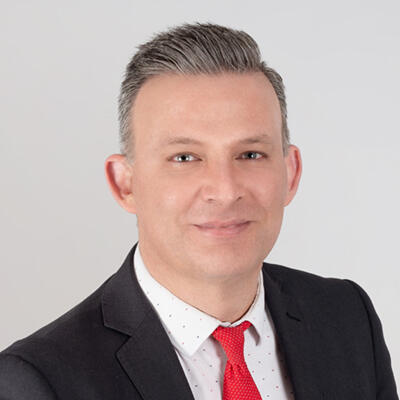
Senior HR Leader with 19+ years of international experience in designing and implementing enterprise HR architectures that align organizational structure, leadership behavior, and performance with business strategy.Proven track record in leading organizational transformation, building accountability frameworks, and translating complex strategy into clear, executable operating models.Key Expertise:
• Organizational Design & Governance
• Leadership Accountability & Performance Systems
• Talent & Succession Architecture
• Culture Transformation & Engagement
• HR Digital & Operational Transformation
• Workforce Strategy & Business AlignmentKnown for resolving complex organizational challenges through simple, applicable frameworks that drive measurable business outcomes.Acts as a trainer and speaker on leadership, communication, and decision-making, supporting executives in applying modern HR principles in practice.
Gerasimos Chatziemmanouil
Chief Human Resources Officer
or
The Structured Voice

People Leadership in the Hospitality Industry: Where Operational Reality Meets Standards
“If the culture we communicate and the daily operational reality do not align perfectly, the standards remain empty words.”
- Dimitris P. -
Corporate Human Resources Manager · May 26, 2026 · 5 min read
In the hospitality industry, Human Resources management is not a theoretical exercise but the active management of a critical balance: on one hand, the strict Operating Standards (SOPs) that guarantee quality and consistency of the guest experience, and on the other, the deeply person-centered nature of the service. The central question - which lies at the heart of modern management - is what people leadership truly requires when culture, service standards, development, and operational reality must align strictly.
Attraction and Trust: The Strategy of the First ContactIn today’s highly competitive landscape, the battle to attract talent and build trust begins at the very first contact during the Job Interview. This is not merely a process for evaluating formal qualifications, but the moment when the foundations of the upcoming collaboration between employer and employee are laid. At this stage, the organization must communicate its Mission and Vision with absolute clarity. If the candidate does not perceive the "why" behind our operation, their commitment will remain superficial.Honesty regarding expectations and the presentation of a specific Career Path are integral parts of this process. If leadership fails to inspire the candidate and show them a path toward professional fulfillment, then we have lost them before they even sign a preliminary agreement or employment contract. Loyalty is not something to be demanded after the fact, it is earned through transparency and the promise of a mutually beneficial partnership.
Onboarding: The Moment of Truth for Employer Branding and TurnoverIf the interview is the promise, Onboarding is the tangible proof of our credibility and the moment of truth for Employer Branding. We can invest vast sums in promoting our corporate image, but if a new partner finds themselves in an environment without guidance or structure on day one, that image collapses instantly.Furthermore, structured onboarding is the most powerful tool for limiting turnover, a phenomenon particularly intense in our industry due to the seasonal nature of most businesses. In an environment where the duration of the collaboration is predefined,
fast and meaningful integration reduces the feeling of "transience". It is essential to explain to the employee not just the "what" of the SOPs, but primarily the "why" they are necessary. When an employee understands the philosophy behind the standard, they cease to view it as a restrictive rule and adopt it as a tool for excellence, which significantly strengthens staff retention throughout the period.
Holistic Health and SafeIn the current operational reality, leadership must recognize that Health and Safety at work has taken on holistic dimensions. It is no longer limited to compliance with protection rules in the physical work environment but extends to the psychological integrity of the staff.• Physical Safety: Strict adherence to safety protocols and the provision of an ergonomic environment are the minimum indicators of respect for the
individual.• Psychological Safety: Especially in hospitality, where the pace is grueling, psychological health is critical for reducing burnout. Leadership that prevents toxic stress, encourages open communication, and protects the mental balance of its partners succeeds in creating a team with high levels of resilience and dedication.
Economic Realism and RetentionWe cannot discuss HR while ignoring the current economic climate. Inflation is a serious parameter pressing the disposable income of our employees. A leader must be
a realist: competitive pay is now the necessary baseline, but it is not enough on its own for staff retention.The real difference is made by the "intangible" value offered by the organization: respect, the holistic safety mentioned above, and active support. In today’s job market, people are looking for an employer with empathy who recognizes daily
challenges. Staffing difficulties are not solved by numbers alone, but by creating a culture where the employee feels their contribution is valued and their effort is rewarded both ethically and materially.
The Generational AccordOne of the greatest challenges is the harmonious coexistence of the three different generations dominating the labor market. Gen X brings stability, Millennials bring strategic flexibility, and Gen Z brings digital speed.The key here is mentoring. However, for this to work, Gen X must first and foremost trust the younger generations and then pass on their experience. On the other hand, the younger generations must help modernize daily operations through technology and AI. AI in HR did not arrive to replace personal contact, but to automate part of the administrative burden, freeing up time for the employee to dedicate themselves to the emotional connection with the guest.
ConclusionIn conclusion, leadership in the hospitality industry requires realism and quick reflexes. Operating Standards are our roadmap, but people are the driving force. If the culture we communicate and the daily operational reality do not align perfectly - especially regarding safety and support - the standards remain empty words.Success comes when the employee evolves organically within the business, feeling safe both physically and mentally.Only then can objectives be met, no matter how demanding the market conditions may be.
Dimitrios Pavlakis for Top HR Voices of Greece
• • •
About Dimitrios Pavlakis:

Dimitrios Pavlakis is an experienced Human Resources professional with a strong background in the hospitality and tourism industry. Currently serving as Corporate Human Resources Manager at Grecotel Hotels & Resorts, he holds leading responsibility for the planning and supervision of Human Resources operations at a corporate level, while strategically developing HR policies, procedures, and programs aimed at strengthening organizational culture and workforce development.With several years of progressive experience in Human Resources leadership roles, Dimitrios has developed expertise in recruitment and talent acquisition,
employee relations, compensation and benefits, performance management,
training and development, labor law compliance, and People & Culture initiatives.
His professional journey combines operational hospitality experience with
strategic HR management, providing him with a comprehensive understanding of
both employee and guest experience.He holds an MSc in Tourism Business Administration from the Hellenic Open
University and a BA in History and Archaeology from the University of Crete. In
addition, he has completed specialized certifications in team building,
negotiation, complaint handling, payroll and labor frameworks, guest experience
management, and wine studies.Dimitrios is fluent in Greek and English and has working knowledge of German. He
is passionate about continuous professional development, organizational growth, and creating positive workplace environments within the hospitality sector.
Dimitris Pavlakis
Corporate Human Resources Manager
or
The Operational Conscience Voice

Taking Care of People: Charity or Strategy?
“Longer working hours do not automatically lead to higher productivity. In fact, they may point to the opposite.”
- Vera B. -
HR Officer | HR Operations | Recruitment | Psychologist · May 18, 2026 · 6 min read
It has been 8 years since Greece exited the bailout program, yet according to Eurostat data, it consistently ranks first among the 27 EU member states in the share of employed persons usually working 49 or more hours per week in their main job (1). At the same time, Greece has the second lowest labour productivity per hour worked (2). The European Commission’s report states that Greece is not achieving productivity convergence with the rest of the EU, while labour productivity per hour worked was the lowest in the EU in 2023 (3). In other words, the data suggest that longer working hours do not automatically lead to higher productivity. In fact, they may point to the opposite.But let us leave statistics aside for a moment. The other day, I was talking with a friend who has been working in the retail sector for years. “They’re squeezing us,” he told me. “Every day feels like torture: long hours, heavy workload. But when the foreign brand representatives visit, everything suddenly seems to change and the business starts operating properly.”Of course, it was not the first time I had heard of what I would call the “squeezing method,” the practice of pushing employees to their limits in the name of KPIs. I am not sure whether this is the rule or the exception, but it is certainly a topic that comes up often around the table among friends and colleagues.And the results? High turnover, burnout, psychological distress, musculoskeletal problems, heart disease, and strained family relationships (4), (5), (6), (7), (8). If we look at the consequences in a broader social context, the impact becomes even heavier: increased pressure on the healthcare system, wider social strain, family disruption, you name it.According to the WHO, poor working environments, including excessive workloads, intense work pace, understaffing, long, unsocial or inflexible hours, and conflicting work and family demands, pose serious risks to mental health (9).
Recent studies show that long working hours prevent workers from spending time with their families, increasing the risk of work family conflict (8). In addition, these studies suggest that overwork and poor working conditions are significantly associated with a higher risk of sleep disturbance and burnout, particularly disengagement and exhaustion (4), (5), (8), (10).Burnout, as introduced by Maslach and Jackson (1981), consists of three dimensions: emotional exhaustion, cynical and detached attitudes towards the people one interacts with at work, and negative self evaluation in relation to one’s work and sense of fulfilment (11).Other studies report a significant negative relationship between burnout and productivity, as reflected in absenteeism, absence from work, often due to ill health, presenteeism, being at work despite being unwell, intention to remain in the profession, intention to change jobs, work accidents, and work ability (8), (12), (13).And this brings us to HR and its role in such a context. Does it watch? Does it become part of the system? Does it tolerate, stay silent, perhaps even stay asleep? Or does it react, step in, influence, speak out, and wake things up?Of course, it may be afraid to challenge what is happening, to say the uncomfortable truth. After all, “I’m just an employee,” one might think, like anyone else. And it is only human to be afraid of opposing the person who pays you. It is perfectly understandable to fear losing a prestigious and well paid job, who would not? But is it acceptable to stand back and watch people collapse under physical and mental strain?Maybe the answer lies in the term manager itself. What is a manager’s mission? According to Mintzberg (1990), the manager is not a passive observer but a key figure in the unit’s decision making system (14). The manager is vested with formal authority, develops interpersonal relations, makes decisions and strategies, commits the unit to important new courses of action, and negotiates between costs, benefits, and feasibility (14). In other words, the role itself implies responsibility, judgement, and influence. This means that a manager is not simply there to observe reality, but to shape it. And if reality is harming people, then the manager is in a position to change it.And this is exactly the point at which the HR manager should turn to the boss and say: “Listen, boss, I need to tell you something. Heavy workload and long working hours are damaging employees’ physical and mental health.” And the boss may well reply: “Even if you are right, I do not really care. Business is business, and money is what matters.” But that is precisely where the manager should answer: “Money is exactly what I am talking about too.”According to recent studies, employee disengagement, overextension, ineffectiveness, and burnout cost employers heavily (15). Over the course of a single year, burnout costs an employer an average of $4,000 for a non managerial hourly employee and approximately $11,000 for a manager (15). In a U.S. company of just 100 employees, disengagement and burnout can amount to roughly $500,000 per year. In many cases, employers do not act unless they realise that a problem has a direct financial impact on the organization (15). Once burnout is seen not only as an employee wellbeing issue but also as a measurable economic burden, the willingness to intervene may become much stronger (15).In other words, boss, squeezing your employees is costing you far more money than you think. So what will you do: keep losing money, or finally understand that taking care of your people is not charity, but strategy?"
Vera Baka for Top HR Voices of Greece
• • •
References(1) Eurostat. (2026). Long working hours in the main job by professional status
and occupation (lfsaqoe3a2) [Data set]. European Commission. Retrieved
April 18, 2026, from
https://ec.europa.eu/eurostat/databrowser/view/lfsaqoe3a2/default/bar?lang
=en(2) Eurostat. (2026). Labour productivity per person employed and hour worked
as percentage of the EU average (TESEM160) [Data set]. European Commission.
Retrieved April 18, 2026, from
https://ec.europa.eu/eurostat/databrowser/view/TESEM160/default/bar?lang=en(3) European Commission. (2024). Country report – Greece. Directorate-General for Economic and Financial Affairs. https://economy-
finance.ec.europa.eu/economic-surveillance-eu-member-states/country-
pages/country-report-greece_en(4) Rotenstein, L. S., Brown, R., Sinsky, C., & Linzer, M. (2023). The Association of
Work Overload with Burnout and Intent to Leave the Job Across the Healthcare
Workforce During COVID-19. Journal of general internal medicine, 38(8), 1920–1927. https://doi.org/10.1007/s11606-023-08153-z(5) Cokki, C. (2021). Effect of work overload on job satisfaction through burnout. Jurnal Manajemen, 25(1), 56. https://doi.org/10.24912/jm.v25i1.703(6) Hu, B., Wu, Y., Pan, Y., Ding, X., Niu, D., Li, J., & Yan, T. (2024). Association of
long working hours and multi-site work-related musculoskeletal disorders
among transportation industry workers in Beijing, China. International archives
of occupational and environmental health, 97(10), 1063–1071.
https://doi.org/10.1007/s00420-024-02110-x(7) World Health Organization. (2021, May 17). Long working hours increasing
deaths from heart disease and stroke: WHO, ILO.
https://www.who.int/news/item/17-05-2021-long-working-hours-increasing-
deaths-from-heart-disease-and-stroke-who-ilo(8) Baek, S. U., Won, J. U., & Yoon, J. H. (2023). The role of work-family conflict in
the association between long working hours and workers' sleep disturbance and
burnout: results from the sixth Korean Working Conditions Survey. BJPsych
open, 9(5), e165. https://doi.org/10.1192/bjo.2023.555(9) World Health Organization. (2024, September 2). Mental health at work.
https://www.who.int/news-room/fact-sheets/detail/mental-health-at-work(10) Conceoção, A., & Palma-Moreira, A. (2025). The Relationship Between
Occupational Stress, Burnout, and Perceived Performance: The Moderating Role
of Work Regime. Administrative Sciences, 15(10), 377.
https://doi.org/10.3390/admsci15100377(11) Maslach, C. and Jackson, S.E. (1981), The measurement of experienced
burnout. J. Organiz. Behav., 2: 99-113. https://doi.org/10.1002/job.4030020205(12) Dewa, C. S., Loong, D., Bonato, S., Thanh, N. X., & Jacobs, P. (2014). How
does burnout affect physician productivity? A systematic literature review. BMC
Health Services Research, 14, Article 325. https://doi.org/10.1186/1472-6963-
14-325(13) Aronsson, Gunnar & Gustafsson, Klas & Dallner, Margareta. (2000). Sick but
yet at work. An empirical study of sickness presenteeism. Journal of
epidemiology and community health. 54. 502-9. 10.1136/jech.54.7.502.(14) Mintzberg, H. (1990). The manager’s job: Folklore and fact. Harvard Business
Review, 68(2), 163–176.
https://gcc.glendale.edu/ppal/Busad%20101/mintzbergmar1990.pdf(15) Martinez, M. F., O'Shea, K. J., Kern, M. C., Chin, K. L., Dinh, J. V., Bartsch, S.
M., Weatherwax, C., Velmurugan, K., Heneghan, J. L., Moran, T. H., Scannell, S.
A., John, D. C., Shah, T. D., Petruccelli, S. A., White, C., Dibbs, A. M., & Lee, B. Y.
(2025). The health and economic burden of employee burnout to U.S. employers.
American Journal of Preventive Medicine, 68(4), 645–655.
https://doi.org/10.1016/j.amepre.2025.01.011
About Vera Baka:

Vera Baka is a psychologist with a background in Business Administration, Developmental Psychology, and Human Resources Management. She has hands-on experience across people management, HR and business operations, and employee lifecycle processes. Her profile combines behavioral expertise with commercial understanding, supported by leadership experience in both corporate and entrepreneurial environments.Her interests focus on workplace culture, employee well-being, ethical performance management, and the evolving role of HR in building sustainable organizations.
Vera Baka
HR Officer | HR Operations | Recruitment | Psychologist
or
Employee Benefits (Affiliation Article)
What We Have Learned About Employee Benefits
“According to Mployer Advisor, companies with highly rated benefits and effective communication around them experience 27% lower voluntary turnover than their peers.”
- madbenefits -
Periklis Hanna and Dimitris Antoniou
Co-founders, MadBenefits · May 5, 2026 · 5 min read
We are not HR practitioners. We are not merchants. We sit somewhere in between, running an employee benefits platform that connects 250+ Cyprus merchants with 6,000+ employees, and from this vantage point, we see something that neither side sees on its own. We see why employee benefits programmes quietly fail across this island, and we see what it takes to make them actually work.Let us start with what the research is telling every HR team in 2026, whether they have time to read it or not.According to Mployer Advisor, companies with highly rated benefits and effective communication around them experience 27% lower voluntary turnover than their peers. Aflac found that 84% of employers credit their benefits package as the reason they were able to recruit top talent. Forbes reported that 46% of workers left a job specifically because they felt under-appreciated. Replacing a single employee costs a lot.The numbers all point the same way. Benefits, done well, are one of the highest-leverage retention investments a company can make. And yet most Cyprus companies are running benefits programmes that look almost exactly the way they did fifteen years ago. A list of partner discounts, a printed plastic card, sometimes a PDF circulated by email, occasionally an Excel file maintained by whoever in HR has the patience for it. The intention is real. The execution has not kept up.Here is what we see from our seat that HR teams do not always see.The merchant side is harder than it looks. When a Cyprus HR team builds an in-house discount programme, someone on that team has to call a gym, a restaurant, a beauty salon, a dental clinic, and convince each one to offer a deal. The merchant’s first question is almost always the same. How many employees do you have? If the answer is under a few hundred, the conversation often ends there. We have watched it happen. We have also watched merchants threaten to leave existing schemes because “nobody is coming,” demand in-person meetings before agreeing to anything, and ghost HR teams the moment a more attractive partner appears. None of this is anyone’s fault. It is the natural friction of bilateral negotiation at a small scale. Multiply it by twenty merchants, then update it quarterly, and the cost in HR hours becomes considerable.The employee side is harder than it looks too. The research that struck us most when we were building this platform came from an Xexec survey: two-thirds of employees said they would prefer two tickets to a concert of their choice over three times the value of those tickets added to their paycheque over a year. Read that again. Three times the cash, declined, in favour of something personal. This is the part most benefits programmes get wrong. They treat the workforce as a single audience. But a single mother of two does not want the same thing as a twenty-six-year-old training for a marathon. A new father saving for a baby stroller does not want the same thing as a couple planning a holiday. When a benefits programme offers the same five logos to all of them, most of the workforce sees nothing they would actually use, and the programme quietly becomes invisible.This is why we built MadBenefits the way we did. Not as a static list, but as a live platform spanning more than fifteen everyday categories, from food and dining to fitness, beauty, travel, education, pet care, electronics, entertainment, and more, with a personalisation layer that surfaces different deals for different employees based on what they actually use. New merchants are added every month. Expiring offers are refreshed before they go stale. Push notifications and flash deals create the kind of small, repeated moments that recognition research tells us matter far more than annual gestures.Our deepest belief about this category, and the one we want to share with the HR community on this island, comes from something Gallup-Workhuman documented clearly: employees who receive frequent, small, personalised acts of recognition show dramatically higher retention than those who receive occasional large ones. Benefits, used well, are exactly this. A small saving on a Tuesday lunch is a tiny act of being seen. A discount on a child’s birthday gift is the company quietly showing up in family life. A weekly engagement loop, repeated across hundreds of employees, builds something an annual salary review cannot.There is one feature we built that we believe matters more than any other, and it is the one that solves a problem most HR teams in Cyprus have never been able to solve. 73% of companies, according to Thanksben’s benefits benchmarking research, do not measure the engagement of their benefits at all. They cannot tell their CFO whether the programme is working. With our platform, every employee can log how much they saved on each redemption, anonymously, and HR sees the aggregate total. For the first time, an HR director can walk into a board meeting and report exactly how many euros their benefits programme returned to their workforce last quarter. That number is the proof of investment that has been missing from this category for two decades.The future of HR in Cyprus, in our view, will not be defined by who pays the most. Salaries are competitive across the island, especially in tech, financial services, and shipping. The differentiator over the next five years will be which companies make their employees feel personally seen, in small ways, every single week. That is what benefits, built properly, do.Our job is to make that easier. The HR community’s job is to demand more from the category, and to stop accepting the spreadsheet, the plastic card, and the PDF as the best the market can offer. They are not, and the data says you deserve better.
Periklis Hanna and Dimitris Antoniou for Top HR Voices of Cyprus
About madbenefits:
MadBenefits is a Cyprus-based platform that replaces traditional employee perks with a streamlined mobile app. It connects teams to instant discounts at local gyms, restaurants, and shops, making benefits practical for everyday use.For HR teams, it offers a "plug-and-play" solution with zero administrative overhead. The app automates perk delivery and tracking via QR codes, helping companies boost employee engagement without any manual management.
madbenefits
or
The Ethical Recruiters Voice

Inside The Recruitment Crisis in Sunny Cyprus
"What kind of society are we building with the way we hire?"
- ChristinaK.-
Founder & Recruitment Director, InnerCircles | February 5th, 2026 · 9 min read
In Cyprus right now, recruitment is not just about filling roles. It is quietly rewriting who gets to live in which city, who can afford rent, and who is pushed to the edges of the economy.Fintech, iGaming and tech companies are pouring into the island under the umbrella of “companies of foreign interests.” On paper, there are rules, ratios and compliance frameworks. In reality, there are salary gaps, nationality bubbles, language-based hiring shortcuts and a labour market where “cost and speed” often win over ethics and balance.Into this landscape steps Christina Koro, Founder & Recruitment Director of InnerCircles — a recruiter who openly and honestly describes recruitment as PR, and who is blunt about what really happens when companies treat people as “robots” or “numbers” and culture as an “afterthought”.What follows is a heavily curated version of our long-form conversation. We have kept the structure, intent and voice intact — and used only Christina’s sharpest verbatim lines, without rewriting her words. The aim is simple: to maintain a stage where honest voices can speak clearly about what others prefer to sugarcoat and (well) hide!
Q1. The anthropology deficit: who gets seen, who gets sidelined?
Question:
In Cyprus’s fintech, iGaming and tech industries, how do you see companies treating candidates from different nationalities, and what worries you about the way management asks recruiters to evaluate people?
-
ChristinaK:
“Let’s start with the companies that currently influence the market in Cyprus — fintech, iGaming and technology.These are the industries I’ve been working in for the last seven years of my career.The point is that in most of these companies, what management sees — and what they push recruiters and HR to work on — is not to see candidates for their skills, their capabilities, or their identity beyond the CV. They mostly see candidates as robots, as people who will work only in the way the company wants them to work.
In my perspective, in these industries, the cultures that are mostly on top are Israeli companies and Russian companies. And what we see, especially in Russian companies, is that local people are not prioritised.They prioritise people originally from those countries — Ukrainians, Russian speakers — and this, in my view, is not something that should be done, especially when we are working in Cyprus, a naturally regional country.We need to give opportunities to Cypriots. We need to give opportunities to Germans. We need to give opportunities to all people, no matter the country, no matter the culture, no matter the language they speak.We need to give more equal opportunities.”
Q2. When the “perfect CV” explodes in your hands
Question:
Have you seen cases where a CV looked perfect on paper but the hire failed badly once the person joined? What did those experiences teach you about the limits of CVs and interviews?
-
ChristinaK:
“What I’m trying mostly to do with management is to convince them that above all we need to see the character of the candidate.Character is a specific characteristic of a human being that you cannot change.But most companies, and most top-level hiring managers, say that it’s just the CV, just the experience, that matters at the end of the day — especially at senior level.Many times, in my experience, we have hired people whose CV was extraordinary. The experience was on another level, and we honestly expected huge success.And after four months, we realised that it had nothing to do with the capabilities of the candidate.Nowadays, technology makes it very easy to create a CV and put fake information in it. And most of us don’t spend the right time to figure out if what we see is true.One interview, a second interview, or a test cannot give you the final image of what a candidate is capable of.And this has happened many times in my career — hires that were not what we expected, and that created a lot of crisis at the end of the day.”
Q3. Cost, speed and the silent responsibility of recruiters
Question:
When companies in Cyprus focus on filling roles fast and at the lowest possible cost, often hiring from abroad instead of paying local talent what they deserve, what impact does this have on local morale, trust in employers, and the way recruiters are expected to behave?
-
ChristinaK:
“The market of Cyprus is very limited.There are many capable candidates, but they are already taken. And sometimes companies see only money.But the money that comes to companies comes from the employees. And most of the time, companies prefer to let a good local candidate go, instead of paying them what they deserve, and hire someone from other countries for lower cost. And this is not something that we should do.I agree that there are specific positions where we need to hire from abroad. But we also need to give opportunities to local and in-house people, with training and good integration. So it’s 50/50, to be honest — it depends on the position.What companies mostly try to do is: ‘We have a position, we need to cover it in one week. Find me someone. I don’t care. Just fill the position.’But what recruiters need to understand is that recruiters are responsible when they stay silent. When you see that what the company wants to do is not what should be done, you need to speak.Recruiters need to have a voice — to suggest what should be done on a cultural strategy level, not just ‘fill the position’. Because this brings crisis: bad hiring and unstable positions.”
Q4. Who owns ethical responsibility when new markets open?
Question:
When foreign-interest companies enter the Cypriot market, who do you believe should be responsible for keeping hiring practices fair, ethical and balanced — and how should they handle differences in benefits between regions and between “old” and “new” employees?
-
ChristinaK:
“All together. And this starts from HR.HR needs to understand together with recruiters, because they work at the same time. They need to understand how the market works, how new markets work, and the differences that come with them.Let’s take an example. When we bring an employee locally, let’s say, and there are differences in annual leave, differences in public holidays, differences in bonus structure and profit fund — you should not create differences in the benefits you provide to employees.You need to have specific policies. No matter which region you enter, you need to find the spot where all employees are treated in the same way.I understand that sometimes there are differences between senior, middle and junior level. But at the end of the day, they all need to taste the same benefits. Because we are all the same.What we see very often is that when companies enter new markets, they hire new people and give extra benefits to the new employees, while the old employees are treated as stable and loyal — as if they will not leave, as if they will not find other opportunities.But that’s not true. Loyal employees are the ones who are with you from the beginning, and you need to treat them the same way you treat the new employees.
Especially in these markets, we focus on pleasing management — instead of placing the employees.”
Q5. When “business need” clashes with being human
Question:
Can you share a moment where the “business decision” clearly clashed with your own sense of what was humane and right as HR, and how you tried to navigate that tension?
-
ChristinaK:
“Many times. Many, many times.A very clear example was a few years ago, when it was Christmas and we had to fire someone two weeks before Christmas. It was a huge fight with the management, and they didn’t understand.At the end, of course, I couldn’t do anything. Because when a decision is made, it is made.But I tried other ways. I tried to find another way with the management to give something to the employee, at least after the firing, to make it a bit not such a bad feeling during Christmas.And always what I try to do in these cases is to convince the management, or people, or companies, or friends — or even myself as an HR and recruiter — to help that person find a job as easily and as soon as possible.What I’m trying to say is that HR and recruiters must say no sometimes. We are not only acting on behalf of the management. Yes, we are the voice of the management — but we are the voice of the employees as well.And when we have toxic practices from management, we need to make them hear it. Not only act. We need to persuade them.”
Q6. Convenience, culture bubbles and the cost of turnover
Question:
If a company repeatedly prioritizes convenience — same culture, same language — over true cultural fit and diversity, what kind of invisible damage do you see building up inside the organization, and how does that connect to turnover?**
-
ChristinaK:
“The damage is turnover. Multiple turnover.At the beginning, companies don’t realise it. They think that if they bring someone with the same culture and the same language, it will be easier for a number of employees to work with that person. But it’s not like that.This creates turnover and turnover and turnover, many times, and most companies don’t realise it. They think turnover is not a problem — and that’s not true.
I agree that in some specific departments this might work for a certain number of people, but in general it’s not true.Companies need to realise that when you find a good candidate with good skills and good character, even if they are not from the same culture and even if they don’t speak the same language, this person will bring value to the company.And I will tell you something else: sometimes it’s not only a management problem. It’s also a problem of the employees of these cultures, because they want to work only with their own people, only with those who speak the same language.This is where the problem starts. And this is where HR and people retention need to come in — with good communication, to make employees understand that they are not the only ones, that they are not the only stars.”
Q7. Integration vs disruption: what real cultural work looks likeQuestion:
Beyond onboarding decks, branded bottles and welcome lunches, what does real cultural integration actually require from organizations operating in Cyprus, day to day?
-
ChristinaK:
“I will tell you this: integration is continuous negotiation.What companies must do, in my perspective, is invest time. They must invest in cultural education. This is something we don’t really see, and it connects to what we said before about culture.If you educate your people and if you make them realise things — and I hope the audience will not take this badly — the reality is this: Russians love Russians. Israelis love Israelis. Greeks love Greeks. Cypriots love everybody; they don’t care so much, they love several cultures.I am Greek, and I am Albanian as well, and I don’t care if I work with Russians. I don’t care if I work with Israelis. I don’t care if I work with Albanians.I don’t want the audience to take this in a bad way. What I want to say is that we need to leave our comfort zone, and we need to be educated to understand that working with multicultural people brings thousands of benefits — especially when companies are constantly entering new markets.Employees need to understand this. Management needs to understand this. Recruiters and HR need to measure integration — not just repeat slogans coming from management.And the difference I want to point out between integration and disruption is respect. When we forget respect for each other, we stop competing on skills and we start competing on culture.That’s what I see today: we compete cultures instead of competing skills in a healthy way.”
Q8. One non-negotiable hiring principle
Question:
If recruiters and HR leaders had to adopt just one non-negotiable principle when hiring in high-influx markets like Cyprus, what should it be and why?
-
ChristinaK:
“The character. One hundred percent the character.Because character cannot be changed. When you see an arrogant person, this will always become self-sabotage — for the team, for the company, and for the role.So let me place it from a different perspective: If recruiters and HR leaders had to adopt just one non-negotiable principle while hiring, and if they truly want to pay more attention to soft skills, then the non-negotiable should be a character or personality test.Because [some] skills can be developed. Experience can grow. Character cannot.”
Q9. “Recruitment is PR”: Fairy tales vs 98% reality
Question
You’ve said “Recruitment is PR.” If hiring is truly a form of public relations, what story do you think companies in Cyprus are telling right now — and what story should they be telling instead?
-
ChristinaK:
“Recruitment today is PR — it’s about attraction.What recruiters usually sell is a beautiful story: a great environment, amazing benefits, perfect communication, wonderful management.But very often, especially in headhunting, we don’t actually know the real environment of the company. And what happens is that recruitment becomes a PR exercise built on fairy tales.People join — and then they realize that reality has nothing to do with what they were promised.Companies need to stop using recruitment as decoration.PR must be true.Hiring should represent 98% of who the company really is, not an idealized version shown through LinkedIn posts, Christmas parties, or staged benefits.And if the environment is not good, if management is not delivering what is advertised, this is where HR must stop and question why.”
Closing editorial note
This is why we built Top10HRVoices: not to recycle corporate messaging, but to give a carefully curated stage to people who are willing to say, out loud, what many only whisper in private.Christina’s words are imperfect, human, and unpolished — but that is precisely where their value lies. She reminds us that behind every “resource” is a person, behind every “hire” is a story, and behind every “PR line” there is either reality or a fairy tale.For companies operating in Cyprus’s high-influx market, the real question is no longer “How fast can we hire?”But: “What kind of society are we building with the way we hire?”
About Christina Koro:
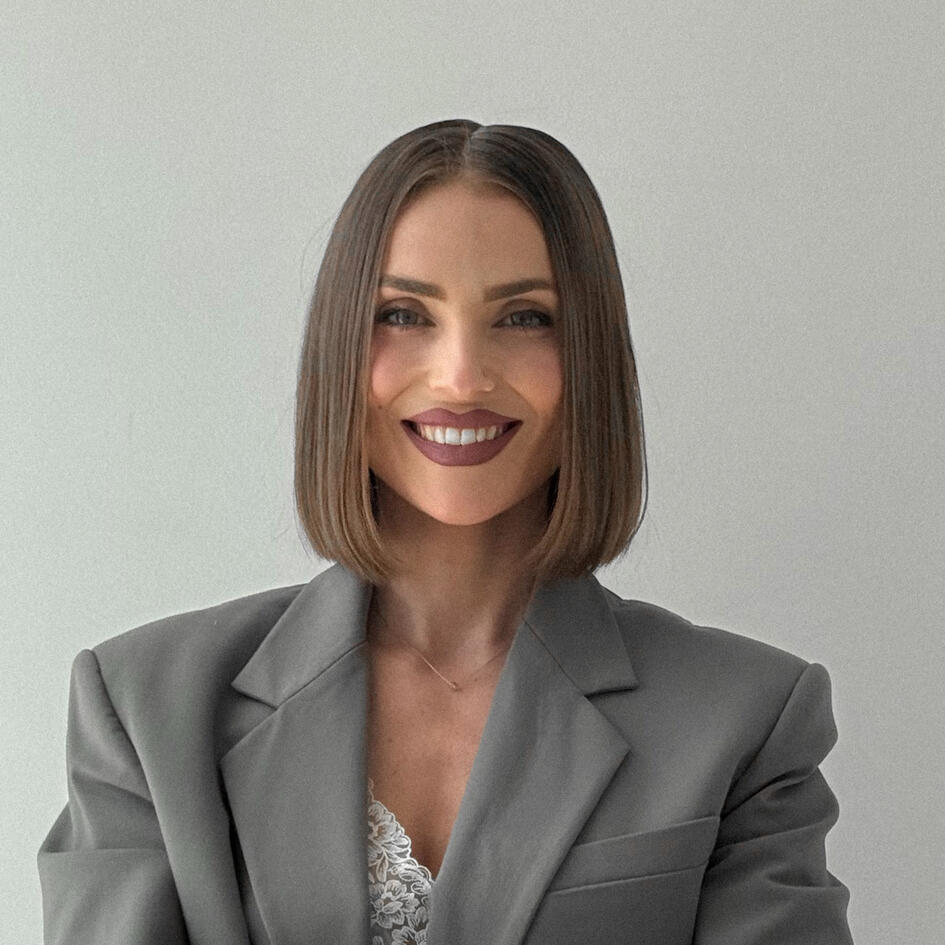
Christina Koro is an HR and Recruitment professional with over six years of experience across the iGaming, technology, and fintech industries. She specializes in talent acquisition, people strategy, and building high-performing teams in fast-paced, international environments.Christina is known for her strategic approach to recruitment, strong stakeholder partnerships, and passion for connecting top talent with innovative companies. At this stage of her career, she continues to focus on driving growth through people-first HR practices.
Christina Koro
Global Head of Human Resources & Talent Acquisition InnerCircles
or
Explore your Partnership Options with:
The Top 10 HR voices
- Cyprus Edition -
Partnerships
2027 Edition
Explore our "Why"
The Top 10 HR voices
- Greece Edition -
or
FORUMS & GALA
The Top Voices Forum Series — 2027
A different kind of room.
By design.
The Top Voices Forum Series arrives in Greece in 2028 - the country whose shipping fleet moves the world, whose tech founders are quietly reshaping European software, and whose HR leaders carry a decade of organisational resilience that the rest of Europe should be learning from.This is not a summit. There is no multi-track agenda. There is no exhibition floor. Each Forum is anchored in one alpha thematic and built around four structural blocks:
🎙 The Keynote - a single recognised authority on the day's thematic, opening the room with a clear position to argue with.
💬 Three Dialogues, three formats:
→ Chatham House Dialogue - closed-door, non-attributable, structurally honest.
→ Fireside Conversation - slower, deeper, one or two voices at a time.
→ Cross-Examination Panel - moderated, deliberately contested, designed for productive friction.Every seat in the room is filled by invitation. Every voice on the stage has done the work. Nothing about the day is decorative.
What this delivers for HR and People leaders.
A room where strategic HR is treated as architecture, not administration - where the conversation reaches CEO-level seriousness because that is exactly who is sitting across the table. HR doesn't translate up. It speaks at the level the room operates at.
Greece 2028 - In Development
The Greek Edition is being designed around the strategic questions that distinguish the Greek HR market from the rest of Europe - and that no current event format is treating with the seriousness they deserve. Anticipated thematics in development:The Greek Shipping HR Imperative - Workforce, leadership, and compliance architecture inside one of the world's largest maritime industries.The Hospitality Workforce at Scale - Leadership, retention, and seasonality in an industry that defines the Greek economy and breaks every assumption Western HR makes about workforce planning.Rebuilding After the Crisis - What Greek HR leaders learned about organisational resilience that the rest of Europe has not yet seriously studied.Final thematics, host city, and dates will be confirmed in collaboration with our Greek Founding Partners.📅 Forum I: 2028, Athens [to be announced]
📅 Forum II: 2028, Athens [to be announced]
📅 Forum III: 2028, Athens [to be announced]
🗳 Gala voting: opens mid-2028 [to be announced]
🏆 Top Voices Gala - Greece Edition: Q4 2028, Athens*
The Gala - Greece 2028
The Greek Edition closes with The Top Voices Gala - Greece - the first formal recognition of the HR leaders, People & Culture functions, and CHROs whose work has reshaped the operating reality of Greek organisations, not in slide decks, but in measurable outcomes. Selection methodology and criteria will be developed and published in collaboration with the Greek Founding Partners.
The Editions Network
Greece is one stop in a deliberately small global network. The Forum Series and Gala travel - preserving the same structural discipline at every stop: one thematic, three dialogue formats, one room, one room only.🇨🇾 Cyprus Edition - Inaugural, 2027 | cyprus.top10hrvoices.com
🇩🇪 Germany Edition - In Development, 2028 | germany.top10hrvoices.com
🇬🇷 Greece Edition - In Development, 2028 | greece.top10hrvoices.com
🇦🇪 UAE Edition - In Development, 2028–2029 | uae.top10hrvoices.com
Become a Founding Partner - Greece 2028
The Greek Edition is being shaped now, in collaboration with a deliberately limited number of Founding Partners. Organisations interested in helping seed the thematics, host the inaugural Greek Forum, or co-present a session may reach out to [email protected].
On Strategic Partners
Partner integration is editorial, not transactional.
A Title Partner co-presents the Forum and brings one curated stage moment - moderating a Dialogue or framing the day's thematic. Logos appear with intent, not by default. Selection is curated, never auctioned.
All Forum and Gala dates, locations, thematics, formats, partners, attendance lists, and the timing - or holding - of any event referenced on this page are determined, scheduled, modified, postponed, relocated, restructured, or, where required, withdrawn at the sole and exclusive discretion of Top Voices and its operating entity. Nothing on this page constitutes a guarantee, offer, commitment, or contractual representation that any Forum or the Gala will take place as described, or at all. Editorial and operational decisions are made solely to protect the standard, scale, and integrity these events demand.
The curator behind the scenes
Founder
This platform wasn’t crafted in a strategy offsite.It was born from something sharper — fatigue and intent.Fatigue with recycled leadership panels, scripted interviews, and visibility that’s purchased, not earned.Intent to remind the world that leadership isn’t a title — it’s the weight of every decision that shapes culture, trust, and consequence.Top10HRVoices.com is curated by Vasileios Ioannidis, founder of the The Top 10 Voices Ecosystem — a Cyprus-based Tectonic HR™ Architect and Fractional CHRO, whose work through HackHR.org redefines how leadership systems scale, govern, and sustain.
This isn’t a ranking.
This isn’t PR.
This is a record of accountability — where influence is proven, not performed.One Voice at a time.

The Top 10 Voices - EcoSystem
More than one platform.
A wider conversation on work, leadership, and the realities shaping both.
🜁The future of work cannot be understood through one lens alone.
That is why the Top 10 Voices Ecosystem brings together distinct editorial platforms across HR, employee experience, and executive leadership.Explore the wider ecosystem:
Top 10 HR Voices
Strategic perspectives from HR leaders shaping the future of people, culture, and work.
Top 10 Employee Voices
First-hand perspectives on the employee experience, workplace reality, and the systems people move through every day.
Top 10 C-Suite Voices
Executive insight on leadership, growth, decision-making, and the business realities behind organisational direction.
Explore the ecosystem:
top10hrvoices.com
top10employeevoices.com
top10csuitevoices.com
Thank you
The relevant department will be in touch with you shortly.